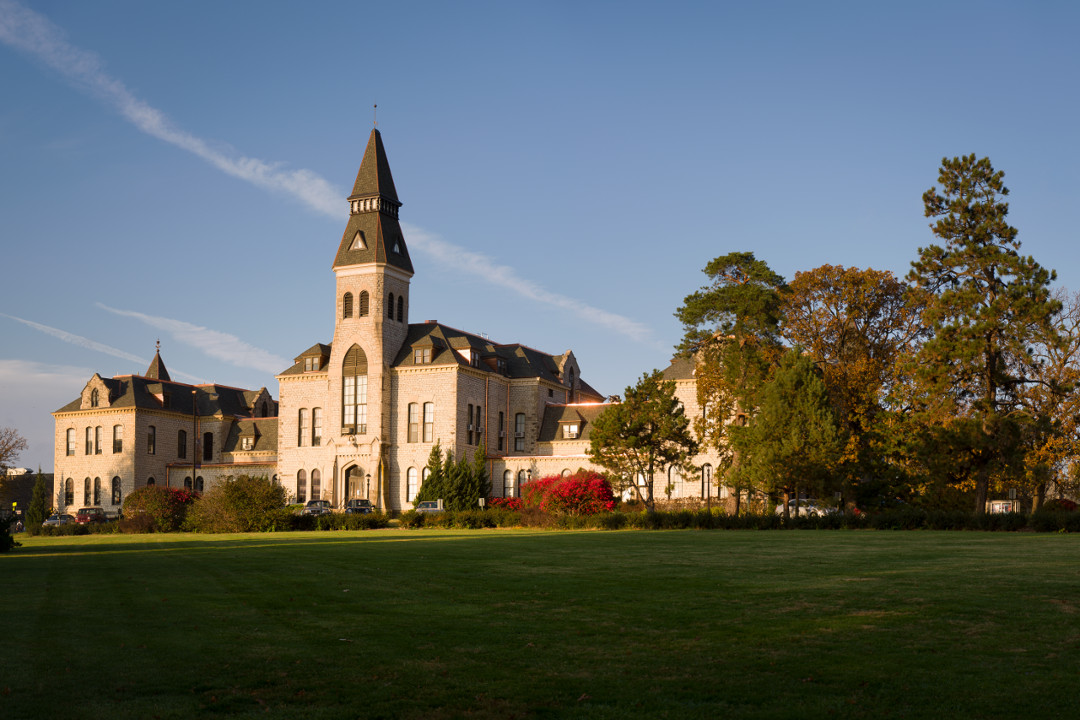
Kansas State University is a comprehensive, research, land-grant institution serving students and the people of Kansas, and also the nation and the world. Since its founding in 1863, the University has evolved into a modern institution of higher education, committed to quality programs, and responsive to a rapidly changing world and the aspirations of an increasingly diverse society. Together with other major comprehensive universities, Kansas State shares responsibilities for developing human potential, expanding knowledge, enriching cultural expression, and extending its expertise to individuals, businesses, education, and government. These responsibilities are addressed through an array of undergraduate and graduate degree programs, research and creative activities, and outreach and public service programs. In addition, its land-grant mandate, based on federal and state legislation, establishes a focus to its instructional, research, and extension activities, which is unique among the Regents’ institutions.
The review of the selected degree programs each year serves to help in the attainment of future goals, development of fresh curricula, and meeting the needs of students, faculty, and the Board of Regents (BOR). K-State’s Program Review Task Force recommended a program review process that incorporated the six criteria identified by the BOR in their program review document. Essentially, the process is divided into two parts. The departments provide detailed information on their instructional, scholarly, and service activities and programs using the Statistical Overview prepared by the Office of Planning and Analysis and other requested materials. These reports are reviewed by the College Dean, the Graduate School Dean (if a graduate program), the College Committee on Planning, and the Provost. Recommendations are made and a final detailed program review report (PRR) is prepared. In preparing the PRR, the Colleges and Departments were aware of degree standards for the number of majors, number of degrees granted annually, number of faculty supporting a degree, and quality of undergraduate students suggested by the BOR. The Deans are responsible for preparing the two page summaries. Drafts of the PRR and the two page summaries were provided to the Provost for review and comment.
For this review cycle, K-State reviewed the academic degree programs in the Colleges of Education and Human Ecology. One-page summaries for each degree program reviewed are attached. For the College of Human Ecology, their graduate programs are distinctly different than their undergraduate programs; so separate one-page summaries were prepared. The following provides a short review of any significant highlights, changes, or recommendations for the departments and their related degree programs.
The nine academic departments and 19 degree programs reviewed this year are on the whole strong and viable academic areas. The College of Education has two professional bachelor’s programs in elementary and secondary education. The college also confers Masters and Ed.D.’s and/or Ph.D.’s in six specialty areas. The College of Human Ecology provides the necessary programs to meet the Land Grant mission at Kansas State University. Eleven bachelors, four masters, and two Ph.D. programs were reviewed.
College of Education:
The mission of the College of Education is preparing knowledgeable, ethical, caring decision-makers for a wide variety of leadership positions. The College of Education offers two professional bachelor’s degree programs, six masters programs, and five doctoral programs. Each program has added to the economic development of Kansas by preparing human capital in the form of elementary and secondary school teachers, education administrators, programs for adult learners, education for the special needs of children and young adults, and college student affairs personnel.
For the Elementary and Secondary Education bachelor’s professional program, a ll students complete two years of study in general education course work outside the College of Education prior to formal admission to the college. Students must possess a 2.5 overall GPA and 2.5 GPA in the discipline in which they intend to seek licensure to be admitted. Among the degree requirements in the B.S. in Elementary Education is a series of carefully planned field experiences in four different semesters throughout the teacher preparation program. Secondary Education faculty work closely with colleagues in respective colleges to ensure that academic majors meet rigorous national and Kansas State Board of Education standards. Kansas State University’s land grant mission enhances the uniqueness of the institution in offering teacher licensure in academic majors not duplicated elsewhere in the Regent’s System. One program, Agricultural Education, (interdisciplinary degree program with the College of Agriculture) is not offered elsewhere in the State of Kansas; another, Family & Consumer Sciences, is one of two programs in a Regent’s school. Other programs such as science (e.g., biological, chemistry, earth/space, and physics) and mathematics, while not unique in the Regent’s System, are traditional strengths associated with the land grant mission.
Two doctoral degrees are offered in curriculum and instruction: the doctor of philosophy and the doctor of education. Advisors for students seeking this degree come from three departments: elementary education, secondary education, and foundations and adult education. The Ph.D. in curriculum and instruction is designed for the student who desires the ability to contribute to teaching, education, and leadership through a thorough grounding in the conduct of research. The Ed.D. in curriculum and instruction is designed for the student who wishes to achieve a superior level of competency in his or her professional field with emphasis on practice and leadership. Selection of courses and experiences is made with the student and the supervisory committee, based on past academic and professional experiences and taking into account the future professional role the student intends to seek. For each degree, there are several areas of emphases: (a) agriculture, business, family and consumer science, and vocational/post-secondary education; (b) diversity, literacy, and social science; (c) media/technology/computers; (d) reading/language arts; (e) science/math/environmental education; and (f) teacher education and curriculum leadership. Currently, only a doctorate is conferred under this program. However, in February 2003, the Kansas Board of Regents approved the consolidation of the M.S. in Elementary Education and the M.S. in Secondary Education into one new degree—the M.S. in Curriculum and Instruction.
The Education Administration graduate program is approved by the University Council for Educational Administration (UCEA) and is one of only two UCEA-approved programs in Kansas and one of only 71 doctoral universities in the nation that have passed the rigorous program review required for UCEA membership. Education Administration and Leadership M.S. and Ed.D. graduates enjoy remarkable employment opportunities due to accelerating retirements of qualified school leaders. Although the undergraduate leadership minor is not a formal degree program, the popularity and demand for this program has been very strong for the last five years. The leadership minor has the largest enrollment of all minors program and competes as the largest undergraduate majors program at K-State. Both students and employers perceive added value by combining the leadership minor with varied university major fields.
For more than twenty years, K-State's adult and continuing education graduate program provides the only post baccalaureate degree in adult education among all Regents institutions. The Department of Foundations and Adult Education contributes to the continuing vitality of the University and advance the knowledge and practice of the lifelong education of adults by its strong commitment to provide off-campus courses at several sites in the state. Faculty members deliver instruction to locations easily accessible by students, and hold regular advising and research supervision outreach meetings throughout the state.
The major role of the Special Education program in the state of Kansas is to prepare teachers, consultants, and administrators for children with exceptional needs in public schools. The special education department requires teachers to be trained in the most current, research-based and practice-validated methods and procedures available. Demand for special education teachers in all states including the state of Kansas is high. There is a tremendous need for qualified teachers to serve students whose development and performance does not follow typical patterns. In Kansas, many districts are forced to hire untrained teachers in this area because they cannot find qualified professionals to fill the positions. At the college and university level, the lack of doctoral level faculty is also causing many positions to go unfilled.
The Counseling and Educational Psychology is comprised of three components: counselor education, educational psychology, and college student personnel services, all graduate level. Undergraduate instruction is also offered in educational psychology and interpersonal relations and is required for teacher certification in Kansas and most other states. At the graduate level, the Department offers one of only two CACREP- certified school counseling specializations in the state, and its Ph.D. specialization in counselor education and supervision is the only CACREP-approved program in Kansas. The master’s level sub-specialization in college student personnel work is one of only three programs in the state, and one of just 74 in the nation that meets standards of the American College Personnel Association (ACPA). Finally, the Ph.D. specialization in student affairs in higher education, one of just 43 in the nation, is the only doctoral program in Kansas emphasizing student affairs. Because of failure to meet Board of Regents (BOR) standards, faculty members decided to discontinue the Ed.D. in Educational Psychology (officially discontinued in fall 2003).This will enable the Department to focus exclusively on preparing school counselors, counselor educators, and college student personnel professionals.
College of Human Ecology:
The mission of the College of Human Ecology is to discover, disseminate, and apply knowledge to meet basic human needs and improve the human condition. The College of Human Ecology is the 7 th largest human sciences unit in the nation. Although most of the students are enrolled in specialized programs in departments within the College, the presence of a large and capable faculty representing diverse academic disciplines is a valuable resource.
The B.S. in Human Ecology serves students seeking family and consumer sciences teacher licensure, students seeking a broad foundation in human ecology as preparation for specialized graduate study, and students seeking knowledge and contextual understanding to address human needs. Students in the B.S. in Human Ecology can qualify to meet family and consumer sciences teacher licensure standards for Kansas. The program is one of two approved family and consumer sciences teacher licensure programs in the state. The B.S. in Human Ecology and Mass Communications (Family and Consumer Sciences Communications) serves a diverse array of students. The primary employment option pursued by graduates is in the arena of public relations where the students capitalize on their journalism expertise and their knowledge of a particular professional field such as hotel and restaurant management or apparel and textiles or family studies and human services. The doctoral program in Human Ecology is the only such program in the state. The Ph.D. program in Human Ecology is a multidisciplinary, interdepartmental program consisting of five areas of specialization. The areas of specialization within the Ph.D. program are: Apparel and Textiles; Foodservice and Hospitality Management; Marriage and Family Therapy; Lifespan Human Development; and Family Life Education and Consultation.
The Department of Apparel, Textiles, and Interior Design (ATID) offers two undergraduate degrees: a B.S. Degree in Apparel and Textiles and a B. S. Degree in Interior Design. Students in the AT program may specialize in apparel marketing, apparel design and production, or textiles. Because of low enrollment, the textiles option was discontinued in FY 2003. Students are required to engage in learning experiences to expand their horizon beyond the boundaries of Kansas through study tours, study abroad, and other forms of experiential learning. The Interior architecture program attracts students with an interest in the products in the interior environment. This differs from Interior Design ( College of Human ecology ) also accredited by the Foundation for Interior design research because ID students' focus is on the human interaction in and with the interior environment. The two programs share a common national rank of the second or third best Interior Design program in the U. S. Interior design is a studio-based program with relatively high instructional costs due to the limitations in class size that studio environments impose. To most effectively use the available faculty and instructional resources, the program has established a selective admissions process that limits the number of students in each cohort to 52. The department also offers a Master of Science degree in Apparel and Textiles. The masters program has three areas of emphasis: Textile Science, Apparel Design and Production, and Apparel and Textile Marketing. Graduates either find employment in their field of study or pursue additional degrees.
The mission of the School of Family Studies and Human Services is to provide high quality educational programs, training, and services; increase knowledge and skills through multi-disciplinary research, teaching and scholarship; and contribute professional leadership in order to enhance the quality of life for individuals and families. Department curricula are designed to develop a multidisciplinary perspective on the study of individuals and families across the life span. Three degree programs in the School have an applied focus (Communication Disorders, Early Childhood Development, and Family Studies and Human Services with several specialty options). The Speech and Hearing Clinic provides considerable applied service to Manhattan and surrounding areas. Internships are provided to students at a number of hospitals and school systems. According to the U.S. News and World Report Best Graduate Schools (2002), the Communication Sciences and Disorders program ranks 12 th among the 166 bachelor/masters speech-language programs in the United States and in the top quartile of all programs including doctoral programs. The Early Childhood Education program is accredited by the National Council for Accreditation of Teacher Education (NCATE) and the laboratory school operated by this program (Stone House) is accredited by the National Academy of Early Childhood Programs of the National Association for the Education of Young Children. The Early Childhood Education program operates a distance education bachelor’s degree for Head Start teachers across the state. The Family Studies and Human Services bachelor’s program emphases include undergraduate programs in Personal Financial Planning, Family Life and Community Services, Family Studies and Human Services and Social Work, and Life Span Human Development. The Dow Jones Investment Advisor rates the Personal Financial Planning program as one of the top five programs in the nation. Graduate program emphases include Marriage and Family Therapy, Family Life Education and Consultation, Life Span Human Development and three distance education emphases through the Great Plains IDEA consortium: Personal Financial Planning, Gerontology, and Youth Development. In the most recent ratings available, the School’s Marriage and Family Therapy program ranked 7 th among the programs based on academic reputation. The Family Life Education program was ranked 6 th.
The mission of the Department of Hotel, Restaurant, Institution Management and Dietetics (HRIMD) is to provide a theoretical, experiential and research base to prepare graduates for managerial, educational or research positions in foodservice and hospitality management, or dietetics. Kansas State University has the only four-year Hotel and Restaurant Management Program in Kansas. Current enrollment over the past five years in Hotel and Restaurant Management has increased from 187 to 229. Organizations within the state rely on these graduates to fill open positions. This is evident in industry support that provides internships, summer employment, scholarships, and full-time employment. The Didactic Program in Dietetics (DPD) provides the necessary courses to meet the academic requirements of The American Dietetic Association (ADA). The Coordinated Program (CP) in Dietetics meets both academic and supervised practice requirements, providing the student with 1035 hours of hands-on-experience and qualifying the student to take the national Registration Examination for Dietitians to attain R.D. status. The Dietetics program is also offered by Distance Education. Unlike other masters programs at Kansas State University, the masters in Foodservice and Hospitality Management and Administrative Dietetics required a minimum of one year’s work experience in the foodservice, hotel, or tourism industry for admissions into the program. Work experience at a supervisory or management level is strongly recommended for the M.S. applicant. Graduates of the M.S. program work in many areas including hotels, restaurants, resorts, and managed service companies. The master’s program in the department also prepares students for the doctoral specialization.
The mission of the Department of Human Nutrition is to discover, disseminate, and apply knowledge to promote improved food choices, nutritional status, and well-being of people. The only unit of its kind in Kansas, it offers B.S., M.S. and Ph.D. programs in nutrition; its Ph.D. program is the only one in the state. The Department participates in interdisciplinary programs such as the graduate program in food science, the undergraduate program in nutrition and exercise with kinesiology, and the new interdepartmental Master’s of Public Health. The undergraduate program enrolls 185 students and is expected to grow with the incorporation of a B.S. program in Athletic Training. Graduate school entry is increasing among baccalaureate graduates. Graduates with M.S. and Ph.D. degrees are employed in higher education and federal health agencies or food processing companies.
The secondary major in gerontology, which may include an emphasis in long-term care administration, provides students at Kansas State University the opportunity to integrate knowledge received in their major professional disciplines with a program of academic study and field experience in gerontology. These programs are of special interest to students preparing for careers in such diverse fields as nutrition, communication sciences and disorders, family life education, human development, dietetics, social work, interior design, physical therapy, marketing, health care professions, architecture, and business administration.
RECOMMENDATIONS
The following recommendations are made for the five degree programs not meeting Board of Regents criteria:
Although the family and consumer sciences teacher licensure program is reported under the CIP code 13.1308, in the future it will be reported with the 19.0101 CIP code because it is an option within the B.S. in Human Ecology rather than a separate degree program. This change will occur for fall 2004.
The B.S. in Human Ecology and Mass Communications program faces an enrollment management dilemma. High enrollment demand in the A.Q. Miller School of Journalism and Mass Communications limits the ability to increase enrollment in this program because it cannot reasonably admit more students to the program than can be served by required courses in that school. This program will be reviewed during the 2003-04 academic year and will be significantly revised or discontinued.
The M.S. in Apparel and Textiles and the M.S. in Foodservice and Hospitality Management and Administrative Dietetics faculty are engaged in several initiatives to reach or exceed the minima criteria of masters students enrolled in the next three years. These initiatives include (1) recruiting top performing K-State undergraduate students to continue in the Apparel and Textiles masters program, (2) offering a Master’s Degree in Human Ecology with Specializations in Apparel and Textiles and Food Service and Hospitality Management, (3) collaborating with the College of Business to offer an MBA with Specialization in Hospitality Management or Dietetics, and/or (4) participating in the Great Plains IDEA inter-institutional master’s degree program through distance technology. These programs will be monitored during 2004 and 2005 with a formal review in 2006.
A few years ago, the Ed.D. program in Special Education was under consideration for discontinuation. However, after a thorough review of the quality of the program and the faculty, the need for special education doctoral graduates in the state and nation, and prospects for exceeding quantitative standards, the College of Education recommends continuation of the program with additional ongoing review. Over the last year, the faculty have intensified recruitment efforts among the master’s degree students attending K-State and expanded the emphases on Adaptive and Functional Special Education. This effort has resulted in 10 doctoral students enrolled for Fall 2003, which is the limit of students given the number and range of responsibilities of the current special education graduate faculty. Since the Special Education master’s program has been and continues to be large and stable, these individuals should provide a reasonably reliable source of doctoral applicants. In addition, the college is engaged in ongoing discussions about merging the Special Education unit with one or more units whose faculty members possess academic expertise complementary to graduate study in Special Education. Such a merger would allow the reallocation of some administrative costs to instruction and allow hiring of faculty to service several functions in the merged programs.
Finally, Kansas State University believes this program review process is very useful strategy, among others, in keeping academic degree programs focused on program effectiveness. In fact, during the past academic year with the anticipation of further state budget cuts and the possibility of having to make difficult decisions regarding academic departments and degree programs, K-State’s Provost initiated a full review of all programs using many of the criteria established by the Board of Regents. Last spring, the Provost recommended six bachelor degree programs, a master’s degree program, and a doctoral program to be discontinued as of fall 2003. In addition, 24 programs (including the five mentioned above) were asked to provide proposals for increasing enrollments and/or degrees conferred by the end of January 2004. Since the inception of this process five years ago, K-State has internally reviewed 15 programs (for program improvement) and discontinued 21 programs. Twenty-four degree programs have been targeted as not meeting BOR criteria. The departments who have these degree programs have been asked to submit recommendations for improvements in the program, which may include curriculum changes, mergers with other degree programs or to be discontinued.
Given the nature of these changes, the colleges will not see significant shifts in positions or other direct resources. However, the ability to redirect faculty time and effort to other degree programs and courses will allow the department and/or college to make for efficient and effective use of their limited resources. This savings include, over time, shifts in advising responsibilities, different course assignments, and opens space for other students in already crowded courses.