Doing good for Kansas: How K-State turns community engagement into statewide impact
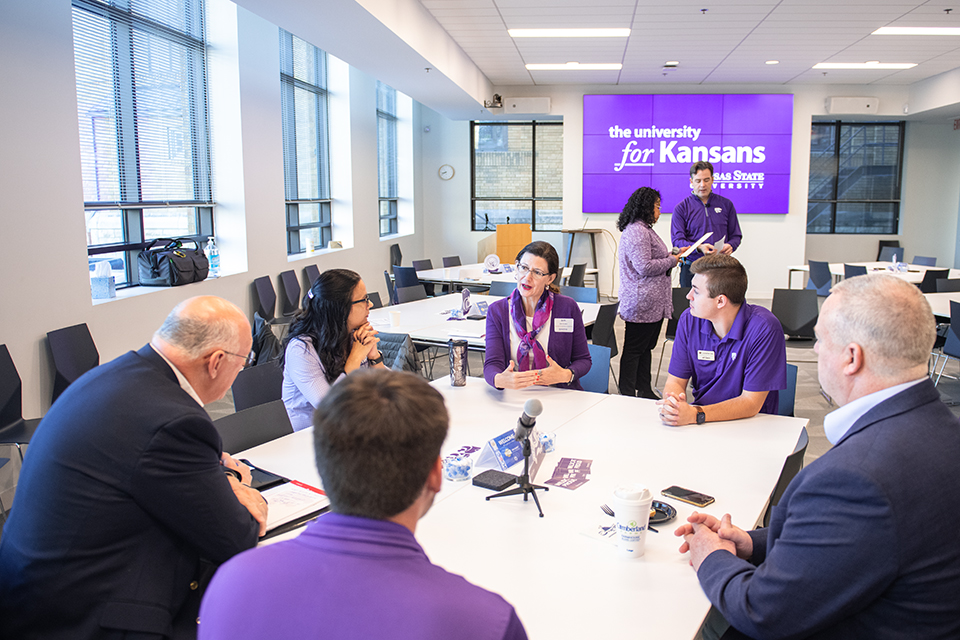
From rural towns to global partners, engaging with and improving Kansas’ communities is ingrained in Kansas State University’s land-grant DNA.
Since 2010, K-State has earned the Carnegie Foundation for the Advancement of Teaching’s Community Engagement Classification, an elective national designation that recognizes excellence among universities for building meaningful, long-term partnerships that impact real community needs.
This month, the Carnegie Foundation renewed K-State's classification, with K-State being one of 237 institutions — and one of only three in Kansas — to receive the designation this cycle.
“Meaningful things happen when universities and communities learn and solve challenges together,” said Marshall Stewart, executive vice president for external engagement and chief of staff. “This classification validates the standard we’re setting for what an engaged, next-generation land-grant university can and should be.”
Embracing the opportunity to do good for Kansas
As a next-generation land-grant university, K-State is committed to positively affecting Kansas communities while creating global impact.
This national recognition validates the university’s mission, strengthens its credibility and opens new opportunities for partnerships and collaboration.
Most importantly, it reinforces K-State’s role as a place where academic work is closely tied to real-world needs and the public good, allowing the university to make a deep, focused impact in key areas such as community health and well-being, sustainability, global food security and biosecurity, and enabling technologies.
Enabling Kansas City's next generation of skilled technologists
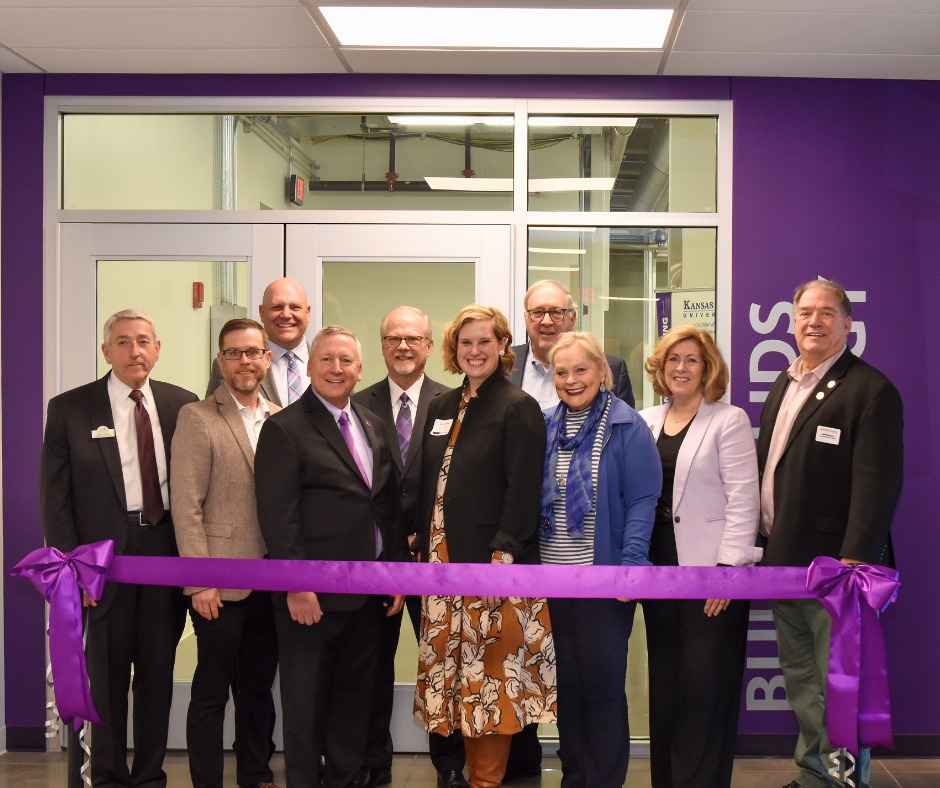
The Bulk Solids Technology Center at K-State Olathe is a powerful step forward in workforce training, applied research and industry collaboration.
The center — the only university-centered facility and staff in North America dedicated to powder and bulk solids — provides knowledge, training and independent testing services for industrial clients in food, pet and animal food, plastics, chemicals, pharmaceuticals, minerals and mining and construction.
It anchors the new Advanced Manufacturing Hub and reflects K-State Olathe’s strategic vision to strengthen and grow the region’s advanced manufacturing ecosystem — all while engaging and developing solutions alongside community partners and industry leaders.
The center is training a next-generation workforce as advanced manufacturing in the Greater Kansas City area — an industry valued at $45 billion in 2024 — surges and demands thousands of new, highly trained workers each year.
Read more about the Advanced Manufacturing Hub.
Developing producers' informed irrigation insights into solutions for sustainability
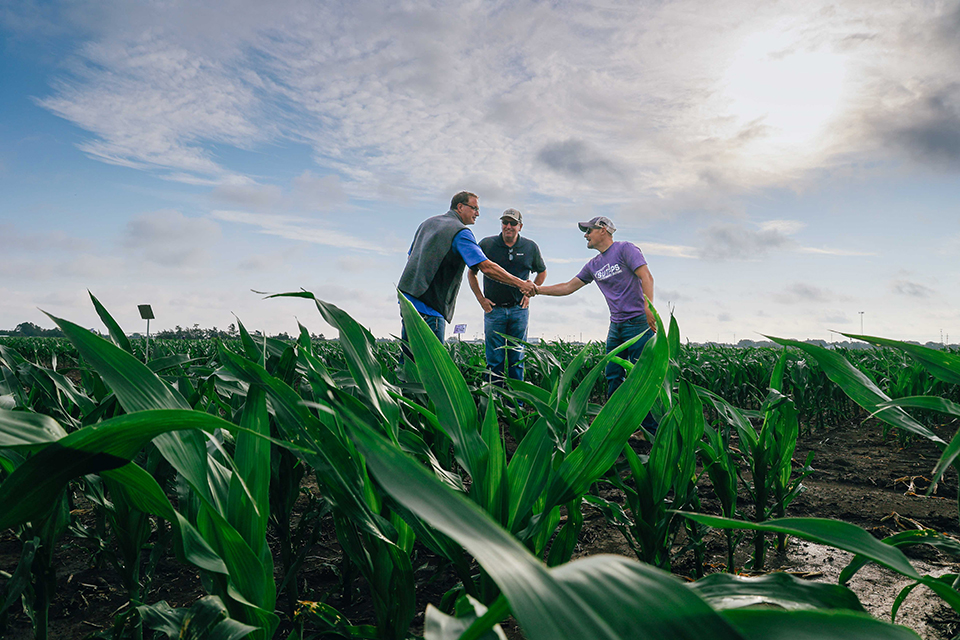
Through the Testing Ag Performance Systems program, faculty like Daran Rudnick, professor and director of sustainable irrigation, work side by side with producers in western Kansas, testing farmer-driven irrigation ideas using cutting-edge technology and artificial intelligence.
“TAPS brings everybody together,” Rudnick said. “Industry can offer their solutions in a more controlled environment, which is easier for them. Producers are exposed to new technology, so instead of a 30-minute highlight, they actually get to use it, make decisions and see how it plays out.”
The result is a living laboratory where competition fuels discovery, data becomes action and sustainability meets profitability.
By connecting expertise across engineering, agriculture and data science — and across state lines — K-State is helping producers make smarter decisions today while stewarding water, land and livelihoods for the future.
Read more about the TAPS program.
Crafting community connections that support military families' well-being
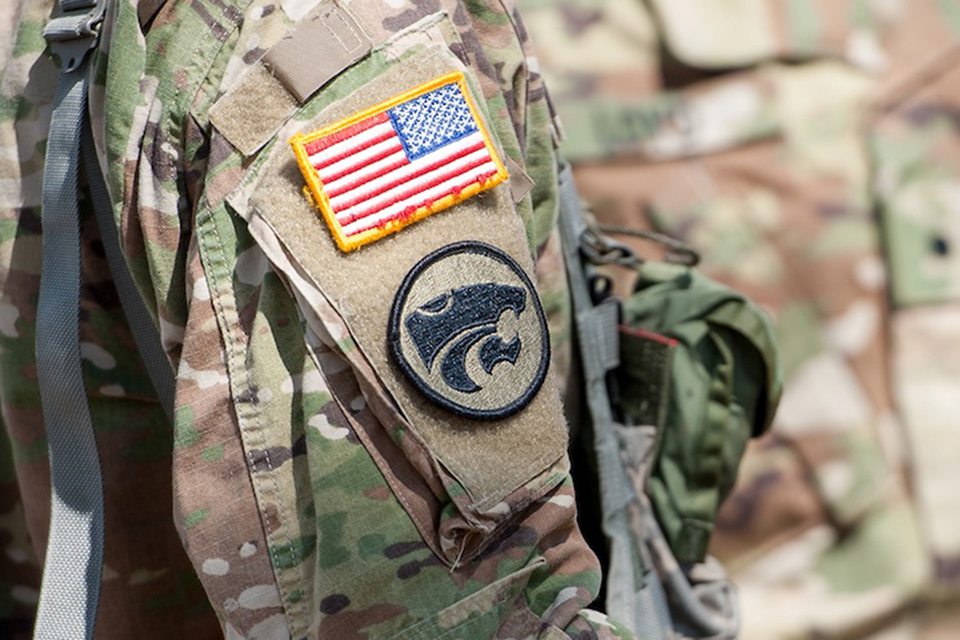
When Lt. Col. Scott Hutchison was looking for a place to work on his doctorate, K-State made the process easy for him and his family.
"I was stationed at Fort Riley, and choosing K-State meant I’d get a great education without having to uproot my family," said Hutchison, now an assistant professor of computer science at the U.S. Military Academy.
Kansas State University and Fort Riley maintain a long-standing, mission-driven partnership that advances community engagement, education, outreach, and workforce development in service to military-connected populations and the broader region.
Through coordinated engagement, K-State expands educational access for soldiers, veterans, and military family members via flexible degree pathways, academic advising, and educational programming that accommodates service commitments.
“The partnership also drives workforce development and economic impact by supporting credentialing, leadership development, and career transition pathways for service members and military spouses," said Cheryl Grice, director of community engagement. "These efforts align with state workforce priorities, strengthen regional talent pipelines, and support employer readiness across Kansas.”
Learn more about K-State's nationally-recognized partnership with Fort Riley.
Springboarding local solutions to address food security nationally
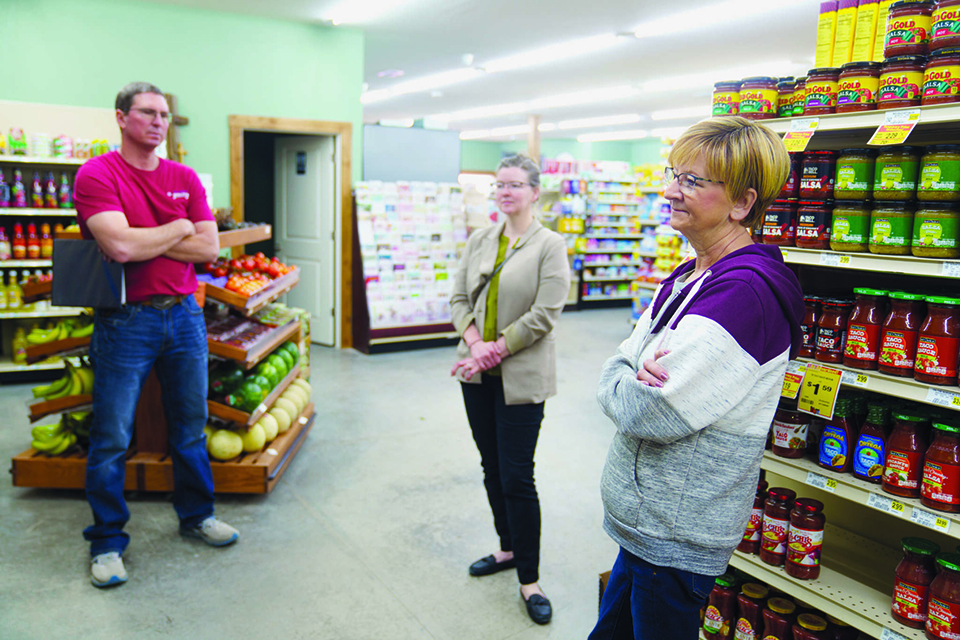
In small-town Kansas, K-State leverages its Rural Grocery Initiative to test solutions to one of the most urgent challenges in food security: keeping reliable access to fresh, affordable food in small communities.
Towns like Axtell become real-world laboratories where community-driven experiments reveal what it takes for rural grocery stores to survive and thrive. With the guidance of the Rural Grocery Initiative, Axtell residents several years ago created a road map for a locally-owned, grocery storefront.
More than just survive, the store has thrived as a source for accessible, nutritious and fresh food and as a model for other communities around the country to emulate.
“The stakes for rural communities are high, and we’ve seen that a rural grocery store can serve as a barometer for the vibrancy of a small town,” said Rial Carver, rural grocery extension specialist and RGI program leader. “The Rural Grocery Initiative is the national leader in supporting rural grocery stores and rural food access.”
Read more about K-State's Rural Grocery Initiative.
K-State is all in on community engagement
K-State’s Community Engagement application highlights 14 signature partnerships in total, each reflecting the university’s long-standing commitment to meaningful, sustained collaboration.
Together, they span a wide range of impact areas, illustrating how community engagement is integrated into everything that K-State does, said Tim Steffensmeier, assistant vice president and director for engagement and outreach.
“Across everything we do at K-State, we define community engagement not as an office or a specific program, but as a core tenet of what it means to lead as a next-generation land-grant university,” Steffensmeier said.