PEOPLE IN OUR LAB
.
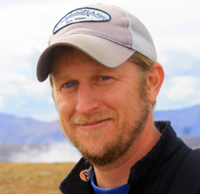
Jesse Nippert
University Distinguished Professor of Biology
PI - Konza Prairie LTER Program
nippert@ksu.edu
My research focus is on plant eco-physiological responses to changes in water availability (spatially, temporally, or driven by climate changes). Particularly, I'm interested in the mechanims of drought tolerance by grassland and savanna species (structure / function) as well as the theory of competition/ facilitation for water between trees and grasses. Thus, I enjoy spending my time addressing questions linking resource availability - physiology - patterns of productivity, with the goal of improving our ability to scale energy dynamics and hydrological processes from the plant- to ecosystem-level.
I love spending time outdoors in the grasslands. These systems exist within an interface of climatic variability and frequent disturbance (fire and grazers). Grass species are deceptively simple, but their unique physiology and form is adapted to environmental stress and disturbance. Despite abiotic and biotic pressures, grasses are masters of growth efficiency and develop dense canopies and high biomass. The environmental and biotic complexity of grasslands provides a challenging (mentally and physically) and enjoyable system to study. For me, there is nothing better than spending a day in the sun of the Konza Prairie.
CV (last updated - Jul 2025
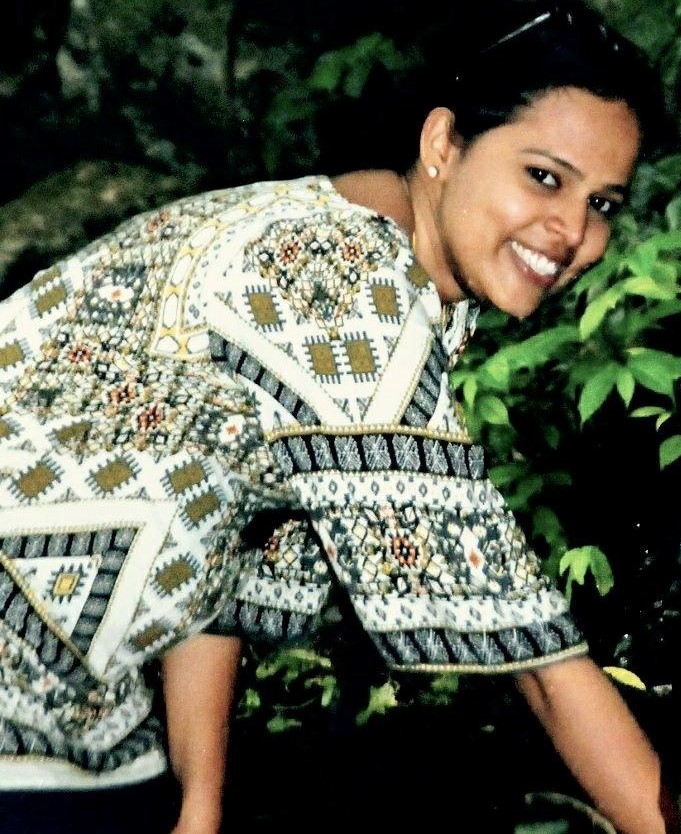
Saranya Puthalath
Post-doctoral Researcher
saranyaputhalath@ksu.edu
I would like to call myself an isotope hydrologist interested in understanding the hydrological processes in the soil-vegetation-atmosphere interface from the critical zone to the catchment and river basin scale. I employ stable isotopes (δ18O and δ2H) along with several other tools to trace the movement and transport of water in different hydrological compartments. I am from Kerala, the southernmost state of India blessed with the tropical vegetation cover of Western Ghats, a biodiversity hotspot. The vegetation was supported by copious rainfall (≈3000 mm annually), but with every passing year, the monsoon rainfall patterns have been witnessing drastic change- both in the form of extreme floods and drought events. This made me wonder about the water cycle changes associated with these extreme events. Hence, during my PhD, I studied the changes in surface water and groundwater circulation processes associated with weather fluctuations and the role of moisture recycling in producing rainfall. Soon, I wanted to explore how the water uptake strategies of plants are affected by these extreme events. For this, I have worked at the prestigious Physical Research Laboratory, India with a National Post-doctoral Fellowship.
I look forward to working at KSU to understand the impact of woody encroachment on the hydrological cycle and the response of woody and herbaceous plants toward extreme events.

Klara Stevermer
M.S. Student
klarastevermer@ksu.edu
Being born and raised in Kansas, it’s easy for me to love our tallgrass prairies. Prior to coming K-State for undergrad, I attended Johnson County Community College, where I found my passion for plants and for biology.
During my undergrad here at K-State, my studies included plant biology, ecology, and evolutionary biology. Alongside my courses, working in the Resilience Ecology lab fostered my love for research. Asking complex questions about our world and using the scientific method to find answers is an exciting and gratifying process for me. I’ve contributed to research pertaining to how bison impact woody encroachment, wallows impact grasslands, and plant-pollinator interactions. My independent undergraduate research project focused on aquatic dynamics and microbial communities in bison wallows. Pursuing a MS in the ecophys lab, I will get to explore how physiological processes in plants are responding to our quickly changing climate. Plant physiology has broadened my understanding of life, deepening my appreciation for all its complexities. Plus, plants are relatable: How can we evade death? How can we budget our energy and resources to succeed? How can we cope with stress? At least for plants, most of those answers are conclusive.
Outside of academics, I have many hobbies. I love spending time with my rescue cat, Butter. Creating art is a big part of my life, whether it be acrylic or watercolor painting, writing, making collages, or sewing, it makes me happy. I love going out on the weekends with my friends and listening to live music. Grasslands are your oyster… or whatever they say.

Corina McTigue
M.S. Student
corinam@ksu.edu
While I am originally from California, I spent the last four years in Colorado completing my undergraduate degree. In May, 2025, I graduated from Colorado State University (CSU) with a B.S. in Restoration Ecology and a minor in Botany. While at CSU, I worked in Troy Ocheltree’s Plant Ecophysiology lab as an Undergraduate Researcher for two years and spent time working on a variety of projects. The independent research project that I led studied the phylogeny of grass species across a representative subset of the grass family. The overall goal of this research was to better understand how phylogeny and phenology impact the grasses’ responses to stresses such as heat and drought. I was also involved in projects that covered a wide range of topics ranging from root carbohydrates to plant community composition. During my time in this lab, I discovered my passion for research, specifically in the field of plant ecophysiology.
Although I am still in the developmental stages for my Masters research project, my general research focus is disturbance ecology and plant ecophysiology. In terms of disturbance ecology, I am particularly interested in grazing, especially as it pertains to cattle and bison. In terms of plant ecophysiology, one aspect I am particularly interested in is plant allocations and regrowth potentials as they relate to Non-Structural Carbohydrates (NSCs). I think that Konza Prairie and Kansas State University will be really great places to learn and conduct this research.
Outside of the lab, I have a lot of different interests. I love spending time outdoors walking and hiking. I also really enjoy hanging out with or calling my friends, going to the movie theater, and embroidering my lab coat.

Chloe Danner
Undergraduate
Biology
I'm an undergraduate studying Environmental Science and Biology at K-State. I love working with plants, but my main interests are in ecology, evolution, and the impacts of climate change and invasive species. In the future, I want to work as an ecologist in different biomes around the United States. Today, I enjoy working in the isotope lab and contributing to ongoing research. Outside of the lab, I enjoy a variety of creative hobbies including journaling, drawing, painting, and music. I love exploring new places in Manhattan and attending fun events or concerts in Aggieville. When I'm not in Manhattan, I'm visiting my family in the Kansas City area, thrifting, trying new foods, or visiting museums.

Addi Riley
Undergraduate
Environmental Science
I am an undergrad with an environmental science major who is looking to build my connections and figure out the path I want to take! I have always had a love and appreciation for the outdoors and cannot wait to further explore it! I love things like playing games, driving around, painting, hiking, hammocking, listening to music, and almost anything there is to do!

Emma Tyndall
Undergraduate
Environmental Science
I am an undergraduate majoring in Environmental Science with a minor in Geology. I specialize in water resources with an interest in hydrology. For my undergraduate research project, I'm looking into the impacts woody plant encroachment has on soil water chemistry and isotopic composition. I’ve always cared deeply about protecting the environment, and I want to work towards a career keeping freshwater systems clean. I enjoy helping out wherever I am needed in the lab and learning new things. Outside of the lab, I enjoy singing in the K-State choir when it works with my classes. I am also the western team captain of the K-State IHSA equestrian team. I compete in Western equitation shows with IHSA and really enjoy being a part of the club. Besides school activities, I like to read, watch movies, and go home to Kansas City to see friends and family.
Amy Concilio (2012-15)
Currently: Associate Professor, St. Edwards, Austin, TX
Shahla Mohammadi (2021-2024) M.S. - Biology
Currently: Ph.D. position at Purdue
Rachel Keen (2019-2023) Ph.D. - Biology
Currently: Post-doc with Sharon Billings (Univ. Kansas) and Pam Sullivan (Oregon State)
Emily Wedel (2017-2019) M.S., (2020-2023) Ph.D. - Biology
Currently: Post-doc with Tyler Coverdale at Notre Dame
Ryan Donnelly (2020-2022) M.S. - Biology Currently: Ecologist working at Colibri Ecological Consulting, LLC
Greg Tooley (2020-2022) M.S. - Biology Currently: Ph.D. student at Colorado State with Alan Knapp
Marissa Zaricor (2018-2021) M.S. - Biology Currently: Ph.D. student at Michigan State with Lauren Sullivan
Rory O'Connor (2014-2019) Ph.D. - Biology
Currently: Rangeland Ecologist, USDA-ARS, Burns OR
Seton Bachle (2015-2017) M.S., (2017-2021) Ph.D. - Biology
Currently: Li-COR Lincoln, NE
Kim O'Keefe (2012-2016) Ph.D. - Biology
Currently: Assistant Professor at Northern Michigan University
Zak Ratajczak (2011-2014) Ph.D. - Biology
Currently: Assistant Professor, Division of Biology, Kansas State Univ.
Troy Ocheltree (2008-12) Ph.D. - Agronomy and SIMSL Lab Manager
Currently: Professor, Dept. Forestry and Rangeland Stewardship, Colorado State University
Jeff Hartman (2009-11) M.S. - Biology
PhD (2015): University of Nebraska-Lincoln (w/ David Wedin)
Currently: Highway Environmental Program Manager at Nebraska Dept. of Transportation
Sally Kittrell nee Tucker) (2009-10) M.S. - Biology
Jacob Carter, (2008-10) M.S. - Biology
PhD (2015): University of Kansas (w/ Joy Ward)
Currently: Senior Scientist -- The Partnership for Policy Integrity
K-State Students
Katie Janzen (2024-2025) MS program at KSU-Agronomy
Conner Beck (2024-2025) Figuring it out
Meghan Maine (2020-2024) fellowship at NBAF
Ella Elmendorf (2023-2024) - working in Entomology
Yasen Alani (2019-2021) - working in health care
Jessica Schauf (2018-2020) - working in W. Kansas as an Agronomist
Madison Lofing (2018-2019) - working in Los Angeles
Samuel Long (summer 2018) - working in Chicago
Kenna Miller (2016-2018) -- working in Kansas City
Lindsey Swartz (2015-2017) - working in Manhattan
Jeremiah Ruiz (summer 2017) - BS student at K-State
Aolani Zidek (2016-17) - B.S. student at U. Hawaii
Rachel Lease (2013-2016) - MS student at Utah State
Ben Ketter (2012-2014) - graduated with MS from U Missouri
Gracie Orozco (2009-2014) - Environmental Engineer, Victoria, TX
Laura Kemp (2011-2012) - scientist at The Land Institute in Salina, KS
Whitley Jackson (2008-2012) - Physician in KC
Teall Culbertson (2008-2011) - Veterinarian in KC
REU Students
Taylor Rodriguez-Blash (2023) from K-State
Faith Atkinson (2021) from West Texas A&M
Lizeth Telleria (2017) from Cal St. Poly - Pomona
Mira Ensley-Field (2016) from Macalester College
Braden Hoch (2015) from K-State
Andy Muench (2014) from U Wisconsin-Madison
Ben Ketter (2013) from K-State
Annie Klodd (2011) from Grinnell College
Rachel Wieme (2010) from St. Olaf's College
Zak Ratajczak (2009) from Vassar College
Laura Kangas (2008) from Michigan Tech
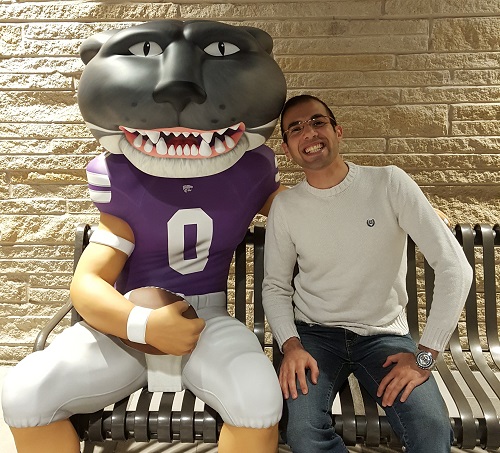
Willie Wildcat and Yasen
Copyright (c) 2011 k-State.edu/ECOPHYSLAB All rights reserved. Design modified from Free CSS Templates.
Background design by: John Girvin