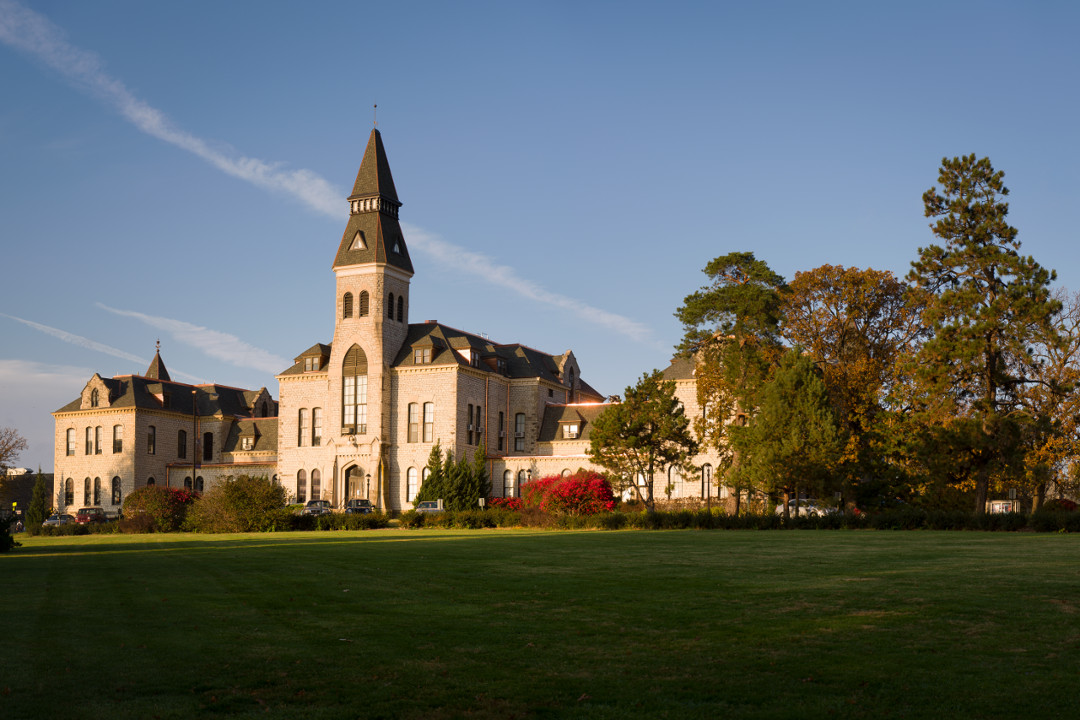
The mission of Kansas State University (K-State) as a comprehensive, research, land-grant institution is to foster excellent teaching, research, and service that develop a highly skilled and educated citizenry necessary to the well-being of Kansas, the nation, and the international community. Since its founding in 1863, the University has evolved into a modern institution of higher education, committed to quality programs, and responsive to a rapidly changing world and the aspirations of an increasingly diverse society. These responsibilities are addressed through an array of undergraduate and graduate degree programs, research and creative activities, and outreach and public service programs. In addition, its land-grant mandate, based on federal and state legislation, establishes a focus for its instructional, research, and extension activities, which is unique among the Regents’ institutions.
Review of the selected degree programs each year facilitates the attainment of future goals and the development of relevant curricula to meet the needs of students, faculty, and the Kansas Board of Regents (KBOR). For the 2010 cycle, K-State reviewed a total of 29 degree programs in 16 disciplinary areas. The following disciplines were included:
The summary for each program is attached. Where possible, the summary reports for all degree programs within a given department were combined into a single page. The following provides a short review of significant highlights, assessment of student learning, and recommendations for the departments and their related degree programs.
The Department of Horticulture, Forestry, and Recreation Resources has the unique responsibility of supplying the educational and research leadership in vegetable, fruit and nut production along with supporting the ‘Green Industry’ (turf grass, landscape, floriculture, nursery and golf course industries) throughout the state. The department's instructional programs provide technically trained graduates to staff the horticulture and park and recreation industry. The horticulture program of study is the only four-year program through PhD in the state of Kansas. The Golf Management, Sports Turf, and Horticulture Therapy B.S. degree programs are unique not only within the state of Kansas/Great Plains Region but the nation. The Golf Management program is supported by the PGA and the United States Golf Course Superintendents Association. The Parks Management & Conservation degree program is unique within the state, is nationally accredited, and is ranked within the top ten of programs within the country. The M.S. and Ph.D. horticulture graduates are recognized by colleagues around the country and the world as being well trained. Evidence of this recognition can be seen in their publication record of scholarly work in refereed journals.
The mission of the Department of Art is based on the recognition of the universal human need for visual expression, the necessity of the visual arts in contemporary society, and the importance of cultural diversity provided for by exposure to the arts. Art students are prepared to make professional and public service contributions by becoming practicing artists who are visually literate, culturally aware, skilled in creative problem solving, and esthetically sensitive. The department has the second largest number of majors in the College of Arts & Sciences, while also providing many classes that are graduation requirements in Apparel/Textiles, Interior Design, and Architectural Engineering. Additionally, Art Education majors who technically receive a degree from the College of Education are required to complete 47 credits from the Department of Art. As a fully accredited member of the National Association of Schools of Art and Design (NASAD) and with less than 10% of U.S. art programs accredited, degree programs within the Department of Art are consistent with national excellence. MFA students in Graphic Design and Digital Arts are in demand most notably in higher education teaching/research positions, and private enterprise.
Biochemistry is the discipline that explains the structures and the activities of living systems at a molecular level using principles of chemistry and physics. It is a continuously advancing field, vitally important to modern life science endeavors in diverse disciplines, including agriculture, medicine, nutrition, environmental sciences, and the biotechnology industry. The B.A. and B.S. degree programs are modeled after recommendations of the American Society for Biochemistry and Molecular Biology and involve rigorous preparation in mathematics, chemistry, and biology as well as a foundation in biochemistry. The biochemistry graduate program is an interdepartmental research-intensive program with a research-based dissertation required for all degrees (M.S. and Ph.D.). Most students who obtain the B.A. or B.S. in biochemistry choose to go on to graduate school or medical school. However, students graduating from the programs also readily obtain employment as research assistants or technicians. Most of the M.S. graduates continue their education towards Ph.D. at Kansas State University (biochemistry or other programs) or at other high-quality academic institutions. Doctoral graduates predominantly continue their careers as postdoctoral fellows or obtain positions in biotechnological industry.
The Division of Biology is the largest administrative unit within the College of Arts & Sciences and is a leader in both teaching and research at Kansas State University. Six degree programs (3 undergraduate degrees, MS in Biology, PhD degrees in both Biology and Microbiology) are offered through the Division. The undergraduate fisheries, wildlife, & conservation biology degree is the only such degree in the Regents System, and serves a need for students throughout the state and region. The Division has sought and achieved funding from the Howard Hughes Medical Institute and from the National Institutes of Health (K-INBRE) for stipends for 25-30 undergraduate students per year, in the biology and microbiology degree programs, to conduct biomedically relevant research in the laboratories of faculty mentors. Similar opportunities exist in ecology research with funding from the NSF-LTER program, the summer REU program centered on the Konza Prairie, the McNair Scholars Program, and grant resources of individual faculty members. Graduate degrees in biology and microbiology are also unique in that all students are full-time, all are funded for 12 months, and all degrees are research-focused. The graduate students benefit enormously from the facilities, including the Konza Prairie, the Herbarium, the Mass Spectroscopy Facility, the Microscopy Facility, and various research centers. Demand for well-trained science students in the animal health/bioscience initiatives in this state continues to be strong especially with the promotion of the animal health corridor in the Kansas City/Olathe/Kansas City Missouri areas.
The Department of Communication Studies, Theatre and Dance offers two distinct programs. The Communications Studies program helps students understand how messages result in particular outcomes within and across context, culture, and media, which is a fundamentally important process, particularly in an age when one’s learning comes more often from observing the communications of others than from direct experience. The Department’s uniqueness within the Regents system is highlighted by the degree program’s concentrations in legal, organizational, political, and relational communication. Also, Kansas State University’s program includes the only nationally competitive Debate and Speech teams. In addition, the department’s legal communication program complemented by a mock trial team is unique in the state, region, and nation. The Theatre and Dance program at Kansas State University is the only such program in the state of Kansas accredited by the National Association of Schools of Theatre (NAST), the official accrediting body for the theatre programs in higher education in the United States. The program has been accredited since 1984 and recently (2010) earned reaccreditation for a seven year period, following a major review that included a self-study and on-campus inspection from a NAST site visit team. In addition, the Kansas State University Theatre program is one of three programs in the United States in the emerging field of Drama Therapy. Kansas State University is also home to the Ebony Theatre program, the oldest university theatre program dedicated to producing works about the African-American experience.
The English programs (M.A., a B.A., an undergraduate minor, and a graduate certificate in writing) have certain features common to English departments almost everywhere. However, English at Kansas State has several areas of excellence and expertise unique to the state of Kansas and distinctive in higher education in the Midwest and nationwide. First, it houses the region’s most prominent graduate programs in Children’s Literature and in Cultural Studies. Both programs attract national media attention for their excellence in research and scholarship. Second, during the past four years, the Expository Writing Program has created, piloted, and implemented a curriculum focused on communities and identities, in order to foster students’ understanding of diverse audiences in first-year composition. English majors develop those abilities employers most hope for: strong communication skills, critical thinking, a readiness to discuss and collaborate with co-workers, a deep sense of the impact of history and culture on human lives, and experience with diverse peoples through the literatures they produce.
Kinesiology integrates perspectives on physical activity drawn from a number of domains to form its own unique body of knowledge. This life science discipline emphasizes breadth and depth of content, scientific methodology, and rational intellectualism for lifelong learning, thinking, and action. The Kinesiology undergraduate and graduate degree programs are unique to Kansas universities in that they provide courses of study that emphasize a life science approach, which includes a natural science specialization in exercise physiology and the social and behavioral science specialization in public health physical activity. At the undergraduate level, Kinesiology students are prepared to enter public health careers or in many cases health professional schools, masters or doctoral programs of study. At the graduate level, Kinesiology offers a M.S. degree but also collaborates on the Masters in Public Health degree and Ph.D. programs in Anatomy and Physiology and Human Nutrition. The Departments of Kinesiology (in the College of Arts and Sciences) and Human Nutrition (in the College of Human Ecology) offer a dual degree in Nutrition and Kinesiology. This degree provides the student in the fields of nutrition and kinesiology preparation for professional careers in wellness and careers that interface the roles of nutrition and physical activity.
The Department of Modern Languages offers a diverse program of courses on literature, civilization, and culture that lead to the B.A. and M.A. degrees. The department also strongly supports study abroad, and has operated KSU faculty-led summer study programs in Mexico, Spain, France, and Germany for many years. Most students who major in the Department of Modern Languages either intend to pursue graduate study in their chosen language; or they study language, literature, and culture in order to enhance their professional lives. Students who have gone on to graduate study in the past have elected to concentrate on linguistics, traditional literature programs, second language acquisition, or a number of other fields in the humanities and social sciences, such as history and political science. Other students apply their language and cultural skills in employment in international business, the travel industry, social services, and the health professions, or they pursue professional degrees in business, law, and similar fields.
The Department of Music is fully accredited by the National Association of Schools of Music (NASM) and offers the following degrees: Bachelor of Arts in Music; Bachelor of Music Education; and Bachelor of Music with concentrations in composition, performance, and music theatre; and Masters of Music with concentrations in composition, history/literature, performance, and education. The National Council for the Accreditation of Teacher Education and the Kansas State Department of Education accredit the degrees in music education. Even though the degree programs are not unique to the other Board of Regents institutions in the State of Kansas, region, or nation, the educational experience students can receive at Kansas State University is unique because of the individualized nature of music study. Much of the music major’s experience is measured in terms of his or her work with applied teachers (one-on-one instruction) or in ensembles. Kansas State University combines the personal attention one associates with an education typically received at a smaller liberal arts college with the resources generally available only at a large comprehensive university.
The Department of Philosophy is an undergraduate only program designed to familiarize students with philosophical issues and the history of those issues, to develop students' abilities to think clearly and insightfully, and to develop students' abilities to express themselves (both orally and in writing) regarding these issues. There is no "industry-specific" demand for philosophy majors. About two-thirds of the graduates seek a post-graduate degree. The abilities to think critically and analytically, to give reasons for what they think, and to express themselves clearly, directly and exactly in speech and writing are fundamental skills that will help students be successful in many lines of work, and succeed in today’s changing business environment. The most significant demand is at the post-graduate level. It is a well-known fact that acceptance rates of philosophy majors at Law Schools and Ph.D. programs are among the highest (as are LSAT and GRE scores). What is perhaps less known is that the same applies to Medical Schools and Business Schools.
Since agriculture is the largest industry in Kansas, the teaching of agriculture to high school students is very important to the economic development of the local communities in Kansas. More than 7,400 students participate in Agricultural Education programs located in 168 Kansas high schools. Kansas State University’s program represents one of 95 total post-secondary degree programs of its type nationally. Faculty members in agricultural education from the department work closely with colleagues in the College of Education to ensure that the Agriculture Education majors meet rigorous standards which often greatly exceed those required by the Kansas State Board of Education, and also meet the accreditation standards set by the National Council for Accreditation of Teacher Education (NCATE). Demand for graduates in agricultural education is high both on the state and national levels. There are currently teacher shortages statewide in agricultural education. Kansas State University is therefore well positioned to contribute quality graduates to the teacher workforce.
The Horticulture program assessed knowledge and diversity, and results for knowledge demonstrated strong learning from freshman to senior levels. Also, student surveys resulted in a very high approval rating for the program. The assessments process has identified and addressed diversity as an area for program improvement. The Parks Management and Conservation program showed improvement across their three outcomes of cognitive enhancement, communication and problem solving. The graduate program applied a thorough assessment of students’ learning in knowledge, critical thinking, methodology, scientific investigation, communication and ethical conduct. The results let to some program improvements.
The Bachelor and Master of Fine Arts have a rigorous assessment process that identified learning in specific outcome areas. Assessment results documented high levels of achievement from students. When the program completes its assessment cycle in 2011, further discussions on emergent issues will determine if any revisions are needed.
Assessments for the Biochemistry focused on understanding of biological structures and use of computer technology for research. In the undergraduate programs, direct assessment results appeared to document value added learning in the assessed knowledge areas and skill acquisition in the use of technology. The graduate level for all programs appeared assessed knowledge, research production and presentation, and communication skills. All outcome measures demonstrated student learning.
For the Biology, Fisheries, Wildlife and Conservation Biology, and Microbiology programs, assessments demonstrated student learning on the awareness of the diversity of life and the evolutionary process, but did not show the same level of achievement in critical thinking. At the MS and PhD levels, student’s understanding of the design of experiments and conducting research were shown to be quite satisfactory, as was their competency in their specialty areas and their ability to critically think and solve research problems.
The assessment plan for the Communication Studies program focuses on appropriate student learning outcomes. The undergraduate outcomes assessed critical thinking, oral and written expression, communication skills and knowledge of the discipline, using a capstone course experience. Feedback from this assessment informed faculty of program changes necessary in the future. The graduate program assessment gathered data on a number of outcomes, including critical thinking, conducting research, and research methodology and presentation. The assessment suggested changes necessary for the recruitment of higher quality students into the program.
The Theatre program is to be commended for recognizing needs that had been exposed through their assessment process and having implemented revisions that facilitate program improvement. The primary recommendation is to hold firm to the new plan and continue to identify program strengths and weaknesses that can lead toward greater student learning in the future.
The English program assessed outcomes related to reading for meaning, critical thinking and analysis of text, and understanding and interpretation of significant works. Students demonstrated satisfactory learning in all areas. Assessment of graduate students’ learning demonstrated strong progress since 2005 in all areas, including conducting research, reading and interpretation, critical thinking, and other relevant skills.
Kinesiology assessed the comprehension and understanding of research, and the ability to communicate. For both outcomes, learning was found to be more than satisfactory. For the graduate program, similar outcomes were assessed and high levels of achievement were demonstrated.
The Modern Language program has recently revised their assessment, with outcomes of reading, speaking, writing, research, and diversity awareness. Student achievement in all areas was satisfactory, and exit interviews showed that the students’ expectations had been met by the program. Assessment of the graduate program has also been revised recently, and only data from the exit interviews was available. The majority of graduate students felt their expectations were met. Future assessments will be more complete as data are gathered.
The Music programs assessed a variety of student learning outcomes and all demonstrated learning in all areas, including analytical skills and knowledge, and performance for the BA and BM degrees, and composing, arranging, and listening outcomes for Music Education. The graduate level outcomes of knowledge, research and interpretive skills all showed strong learning among the students.
The Philosophy program has a clear and well-designed assessment process. Across the five outcomes assessed (critical argumentation, semantics, knowledge of issues, understanding of theories, and diversity of options) all showed learning at levels well about satisfactory. Programmatic changes which should enhance the degree program were also made based on the assessment findings.
The Agriculture Education program has a well-defined assessment process that clearly addresses all expected learning outcomes of the program. The assessments are rigorous and identify students are achieving at a highly acceptable rate. Faculty involvement is admirable with a well-established feedback loop.
This review indicated that two bachelor’s programs with low number of degrees conferred; five master’s programs with low enrollments and/or few degrees conferred, one doctorate program with low number of degrees conferred, and one program did not meet the minimum for the number of instructional faculty with terminal degrees. Rationales for continuing eight programs are summarized below.
The five-year average for the number of bachelor’s degrees conferred in the Philosophy program fell below the KBOR criteria of 10 (for FY 2005-09, 8 degrees conferred). Normally at K-State, students become philosophy majors in the middle of their university careers. The vast majority of the majors (and this holds for philosophy majors elsewhere) enter the university without the slightest idea that they might major in philosophy. The Philosophy program has grown in numbers by about 20% since the last review in 2002. There has been recent interest n the major among pre-med and business students, and the major is attracting highly talented students in the pre-Law area as well as those who want to become professional philosophers. Currently, the program is developing a plan for a 2+2 pre-law/philosophy program, initially with Johnson County Community College, which has the potential, if implemented with a number of community colleges across the state, to expand enrollment by another 20%. With more students in the pipeline to graduate, the number of graduates should increase to meet or exceed the KBOR criteria of a five-year average of 10 degrees conferred. Based on the recent increase in the number of degrees conferred and the strong possibility for growth in the next three to five years, we recommend this program be retained, but reviewed in three years.
The five-year average for the number of bachelor’s degrees conferred in the Music program fell below the KBOR criteria of 10 (for FY 2005-09, 9 degrees conferred). The number of majors in the pipeline for freshmen/sophomores increased 40% from the prior year. In addition, the music program is complemented by a strong music education program, and thus, the cost savings would not be realized by discontinuing this program since both programs require the same core courses in the Music Department. We recommend retaining the bachelor’s program.
While the five-year average for the number of students enrolled in the Masters of Music program has been slightly below the KBOR minimum of 20 (17), recent efforts to improve the program are now seeing dramatic results. In 2010 the number of applicants for the master’s program was up 50% from the previous year and the number of academic-year graduate students has increased 33% to 25 full time students. The results of the creation of the summer master’s degree option are even more dramatic. During the summer of 2010, 49 students were enrolled in the summer master’s option and the number of students now matriculating with completed degrees has reached an average of 10 per year over the last three years. More importantly, the average number of majors over the past five years to include Fall 2010 data (28 students) is at 20, meeting KBOR minimum criteria. Therefore, the masters program in Music is recommended to be retained.
The Kinesiology masters degree fell below the KBOR minimum of 20 enrolled students per year over five years (an average of 19 students enrolled). On the other hand, the program strongly exceeded the KBOR minimum for the number of degrees conferred per year. Because most courses offered for the masters degree program also count toward graduation requirements in the collaborative Masters in Public Health and other Ph.D. programs, there would be little cost savings from eliminating the program. The newly approved combined B.S./M.S. degree will likely result in a significant increase in the number of enrolled masters students. We strongly recommend retaining this program.
While the bachelor’s and doctoral Horticulture degree programs met and/or exceeded KBOR minimum requirements for the number of majors and degrees conferred, the masters degree program did not meet the KBOR minimum requirements for both the majors and degrees conferred (an average of 20 students enrolled and five degrees conferred over five years). The masters program reported a five year average of only nine students enrolled and three degrees conferred. Under the leadership of a new Department Head, an increased emphasis on recruiting and retaining graduate students has been initiated including increased monies available for GRAs. Furthermore, two new programs are also being implemented that should have a positive impact on masters student numbers. The new initiatives are a 3+2 concurrent BS and MS degree program and a specialization in Urban Food Systems. In summary, the masters degree program in horticulture does not require extra resources beyond those already spent for other programs within the department or the university. Elimination of this degree option would not save money for the university. In addition, the K-State horticulture department would be less able to respond to the emerging needs of the discipline’s industries, as is currently being done with the masters specialization in Urban Food Systems. With significant benefits at no additional cost, it is critical that the horticulture masters program remain available.
The 5-year average number of doctoral majors in Biochemistry (22) and the number of doctoral degrees granted (4) strongly exceed the BOR required minima (5 and 2, respectively). However, the BOR criteria are not met in the categories of masters majors (7 vs. 20) and masters degrees granted (3 vs. 5). Essentially, the biochemistry graduate program primarily seeks to recruit doctoral candidates, which is an accepted strategy for a research-intensive basic-science program. A small fraction of applications indicate interest in the masters program in biochemistry while the overwhelming majority of applicants want to obtain a Ph.D. More importantly, a large number of the applicants to the doctoral program already have a masters in other disciplines and plan to obtain the terminal degree in biochemistry at K-State. Basically, retaining the masters degree program involves no additional cost or resource commitment in supporting the masters program. Thus, the masters program is a graduate feeder program and we recommend retaining the masters program in Biochemistry.
The masters in Biology fall slightly under the KBOR minima in terms of the number of students in the program. The masters in Biology had a 5-year average of 19 students enrolled; the KBOR minimum is 20 students. This small deviation from the minima will be alleviated with the building of the NBAF. In addition, discontinuing the program would not save any money because the faculty members who mentor the masters students are the same ones who mentor the doctoral students and teach the undergraduate courses. We recommend retaining this program.
The number of doctoral degrees granted in Microbiology was one per year, while the KBOR minimum is two. With the recruitment of four new faculty members, they have been successful in attracting students and funding. In addition, eliminating this degree would not save any funding since students in the Microbiology program are mentored by the same faculty members and take the same courses as Biology doctoral students. Furthermore, eliminating this degree would limit the professional and career choices of the graduate students. There are currently five Microbiology doctoral students in the Division who are expected to graduate within the next two years. Thus, we view the recent decline as temporary, and the number of graduates in this program should be well above the minimum by the time of the next KBOR review of the program. We recommend retaining this program with an additional review in three years.
The majority of faculty in the department of Biochemistry had funded appointments in the Agricultural Experiment Station and other extramural funding, and for many the teaching portion of their appointment is the minority component of their funded position. Thus, this department did not meet the BOR minimum criterion for the number of faculty having a 50% or more instructional appointment in the department. However, these are full-time faculty working with the undergraduate and/or graduate programs on a daily basis, and the total number of faculty exceeds the BOR program minimums. Given that these faculty members are contributing to the instruction of both undergraduate and graduate students with limited instructional costs, we request that the minimum criterion for faculty be waived for this department.
At this point, all programs summarized in this document are funded to the extent necessary to maintain their quality as well as support the programs in their present structure. Where possible, programs share faculty which increases efficiencies (e.g., Biology and Microbiology). Given the current uncertain economic situation, we continue to monitor all programs relative to Board minimum expectations for graduates in order to determine the financial impact of continuation or elimination.