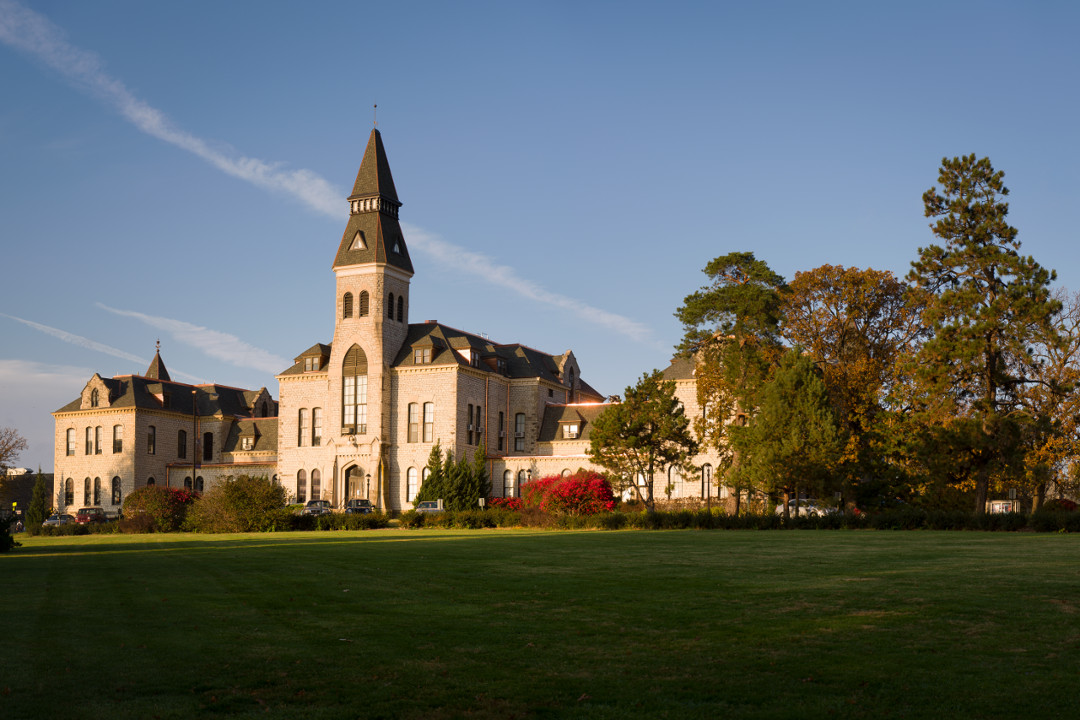
The mission of Kansas State University (K-State) as a comprehensive, research, land-grant institution is to foster excellent teaching, research, and service that develop a highly skilled and educated citizenry necessary to the well-being of Kansas, the nation, and the international community. Since its founding in 1863, the University has evolved into a modern institution of higher education, committed to quality programs, and responsive to a rapidly changing world and the aspirations of an increasingly diverse society. These responsibilities are addressed through an array of undergraduate and graduate degree programs, research and creative activities, and outreach and public service programs. In addition, its land-grant mandate, based on federal and state legislation, establishes a focus for its instructional, research, and extension activities, which is unique among the Regents’ institutions.
Review of the selected degree programs each year facilitates the attainment of future goals and the development of relevant curricula to meet the needs of students, faculty, and the Kansas Board of Regents (KBOR). K-State’s Program Review process incorporates the six criteria identified by the KBOR in its program review document and, beginning with the 2006 reports, includes a summary of activities and progress related to assessment of student learning in each degree program reviewed. Essentially, the K-State process is divided into two parts. The first part includes detailed reports from departments with information on their instructional and scholarly programs and service activities. The Office of Planning and Analysis provides the Statistical Overview data reports to departments to aid in the review and assists with any additional requests from the departments for data. These departmental reports are reviewed by the respective College Dean, the College Committee on Planning, the Graduate School Dean (for graduate programs), and the Provost. The reviewers make recommendations, and departments prepare a final detailed program review report (PRR). The second part of the process involves summarizing the detailed reports into two-page reports by degree program or discipline. Drafts of the PRR and the two-page summaries are provided to the Provost for review and comment. The reports on assessment of student learning come through a reporting and review process that begins at the department level, continues on through the College Dean’s office or the Graduate School, and is ends with the summaries created for this report by the Office of Assessment.
For the 2008 cycle, K-State reviewed a total of 18 degree programs in 10 disciplinary areas: nine degree programs in the College of Agriculture, all four of the academic degree programs within the College of Veterinary Medicine, and five interdisciplinary degree programs. The following disciplines were included:
The summary for each program is attached. Where possible, the summary reports for all degree programs within a given department were combined into a single page. The following provides a short review of significant highlights and recommendations for the departments and their related degree programs.
Of the 18 degree programs reviewed, seven are Ph.D.’s., one is a first professional, six are master’s, and four are bachelor’s. On the whole, all of the degree programs are in strong and viable academic disciplines. Overall, each department and its academic programs provide options and opportunities for the advancement of education, research, and service for the state of Kansas, the nation, and the world.
The Department of Agronomy has the unique responsibility of supplying the educational and research leadership in crops, range, soil, and weed sciences throughout Kansas. The department also contributes substantially to activities in genetics, water science, and environmental sciences. In addition, the department has a responsibility to train international students and provide leadership in agronomy to developing countries. A comprehensive review of the Department of Agronomy was conducted in March 2008 by the USDA-CSREES. The eight-person review team, from various university and USDA research locations, gave high marks to the teaching, research, and extension functions of the department. The report concluded that the “Agronomy Department is a strong department, uniquely well-positioned to develop and evaluate production systems, genetic resources, and decision aids to support continued agricultural productivity, competitiveness, and environmental stewardship.” The department ranks among the top departments at Kansas State University in obtaining sponsored research. The total of $4.0 million compares very favorably with other Agronomy departments in the country.
The placement rate of the graduating bachelor’s degree students is excellent with essentially a 100% placement rate over the past seven years (224 graduates). The M.S. and Ph.D. graduate students are recognized by colleagues around the country and around the world as being well trained. Evidence of this recognition can be seen in their employment record, with many of the graduates assuming responsibilities in professional positions at public institutions and in private industry, and in their publication record of scholarly work in refereed journals.
Student learning was assessed using three of the program SLOs for B.S. students and three outcomes for M.S. and Ph.D. students. Both direct and indirect measurement tools were utilized in their assessment methods. The programs have begun to utilize their assessment data (both direct and indirect measurement results) to generate curricular changes. Data will continue to be collected and 4-year baseline measurements from these instruments will be used to help improve student learning.
The Department of Entomology is unique in being the only entomology department in the state. The department acquires and disseminates new information about insects and related arthropods, which is key to adding to basic knowledge of insects and biology in general, improving technology in the management of insect pests, and maintaining a safe and healthy environment. The high quality of this program is demonstrated by the number of students who apply for its graduate degree programs, the research productivity of students accepted in the program, and their success in finding postdoctoral, academic, and industry positions. Entomology students publish their research in a variety of peer-reviewed journals, and many students submit or publish research results before they graduate.
All departmental lecture courses are taught by tenured or tenure-track faculty who hold a terminal degree. Faculty provide outstanding service to their profession and also serve on regional and national committees and organize symposia and workshops. The high research and publication outputs, which are based in large part on graduate student training and research, coupled with the amount of grant dollars generated, make this a very efficient academic unit.
Student learning was assessed for the six program SLOs for M.S. and Ph.D. students. Both direct and indirect measurement tools were utilized in their assessment methods. As a result of course grades or performance on written and oral preliminary exams, some students have had to take extra measures to demonstrate knowledge of the four core areas of entomology or in-depth knowledge in their area of specialization. The department plans to institute a more effective means of gathering and analyzing the various data that will be collected.
The Food Science Bachelor’s degree program is an interdepartmental program and it is the only one of its kind in the Kansas Board of Regents System. The degree is also central to Kansas, where 24 percent of the gross state product is provided by food-related industries. Many undergraduate students use the Food Science degree to complete pre-professional requirements for veterinary, medical, pharmacy and dental schools while also preparing for challenging careers in the food industries.
The United States Department of Agriculture has documented shortages of four-year college graduates in the food and agricultural sciences. More specifically there are projected shortages in research and development, food quality assurance, sales representatives and production managers. These are exactly the types of careers the Food Science degree prepares students to assume. Additionally, Food Science students are well positioned for careers in the emerging bio-security and food defense industries. Students in this major have 100% placement and often receive signing bonuses. In over 30 years of the program’s existence, there have seldom been enough bachelor’s degree graduates to meet job demand.
The Food Science program developed one of the first bachelor’s degree completion programs for distance students and currently provides 21 distance education courses. Food Science faculty have been very involved with a summer research program designed to recruit more minority students, and the faculty and students have been active in undergraduate research and the Honors program.
Student learning was assessed for three of the program SLOs for B.S. students. Both direct and indirect measurement tools were utilized in their assessment methods. Data will continue to be collected and the program will use baseline measurements from these instruments to help improve student learning. Although few changes have been implemented as a baseline is still being established, various curricular and program changes are being considered to improve student learning for students in the program.
The Department of Grain Science and Industry has a nearly 100-year reputation in the area of grain processing and utilization. It is the only department and program in the United States that offers baccalaureate and advanced degrees in grain science with emphases in bakery science, feed science, and milling science. The department enjoys a worldwide reputation for educating and producing outstanding students, has global influence on the industry, and performs cutting-edge research, teaching, and outreach activities not only in grain but also in biomaterials processing and utilization.
Faculty in the department are recognized nationally and internationally for their expertise in grain science disciplines; are invited to provide keynote addresses, give presentations, and convene sessions at national and international meetings; and offer consulting services. In addition, the department’s faculty members are frequently invited to participate at national and international technical or training courses as well as to provide educational opportunities for international trade teams. The faculty are active in garnering extramural support for their research and outreach activities, and between 2002 and 2008, the faculty were successful in obtaining $12.1 million in grants.
Excellent employment opportunities exist for Grain Science undergraduate and graduate students to obtain industry internships and permanent positions. The outlook for employment continues to be bright as some companies report that current graduation rates are not keeping pace with their needs. The training received by the undergraduate and graduate students in Grain Science and Industry makes them well equipped with the knowledge and skills needed to find suitable positions in the grain and food industries, not only in the US but also anywhere in the world.
For their assessment of student learning, the department’s three undergraduate program options require that their students understand and be conversant with the science and technology that comprise their discipline or specialty. Student learning was assessed using two of the program SLOs for B.S. students, two outcomes for M.S. students and four outcomes for Ph.D. students. The program has initiated a number of changes, based on their assessment results at both the graduate and undergraduate levels. Some, but not all, of the changes were effective. With only two years of data collection, the faculty of all programs are of the opinion that additional data is required in order to make any conclusive statements.
The Department of Diagnostic Medicine/Pathobiology (DM/P) is one of the three academic departments in the College of Veterinary Medicine (CVM). The Pathobiology graduate program is the largest in the College of Veterinary Medicine, consisting of 42 graduate faculty members and 22 active Ph.D. students. An important aspect of this graduate program is that the basic training is received in a vibrant multi-disciplinary environment, exposing students to a variety of disciplines and research areas. Essentially, the existence of a critical mass of faculty in certain disciplines (Infectious diseases, Food Safety, Toxicology, and Production Animal Medicine and Management) has been a major factor in attracting high-quality domestic and international graduate students.
Collectively, the faculty in the pathobiology program have a history of successful extramural funding. In fact, for 2008 the faculty in the Department of Diagnostic Medicine/Pathobiology received over $5.0 million in grant support. Only a small fraction of the grant support is intramural (Kansas State University and the State of Kansas). Because the department does not provide salary support for graduate students, the salary amount (approximately $600,000 per year for 25 to 30 students) comes entirely from extramural grants of individual faculty members. Faculty members with primary research appointment are also involved in teaching courses for professional students and graduate students.
The Pathobiology Graduate Group adopted four student learning outcomes (SLOs) for Ph.D. students. The faculty developed a list of criteria to evaluate each SLO. The data gathered for the past two academic years (2005-2006 and 2006-2007) have been analyzed. One of the outcomes of the assessment data was the development of two graduate level courses. The assessment tools, data collection concerning graduate education, and the review and discussion of the state of the graduate program by faculty at the end of each academic year has had a positive impact on the program.
The mission of the Department of Anatomy and Physiology encompasses instruction, research and continuing education in the disciplines of Gross and Micro Anatomy, Cell and Systemic Physiology, Pharmacology and Neuroscience, all of which are central to the education of veterinarians for Kansas and the nation, to the education and training of graduate students for biomedical careers in teaching, research, and industry, and to the fulfillment of the University’s mission to conduct basic and applied research important for the diagnosis and control of animal and human disease. The graduate program in Physiology is one of two doctoral programs in the College of Veterinary Medicine, and it is the only graduate program on campus or within the state that provides opportunities for graduate study in veterinary physiology.
Students in the Veterinary Physiology Program have published between 15 and 30 papers annually in Peer-reviewed journals since 2003. In addition, these students have received awards at the local, statewide and national level. Graduates from the Veterinary Physiology Program are in high demand in industry and academic positions. Over the last 3 years (2005-2007), nine Ph.D. students have graduated and accepted entry-level university and industry positions.
The program adopted four student learning outcomes (SLO) for Ph.D. students. Ph.D. graduate students were evaluated on 53 outcomes over either a 2 or 3 year period. Overall, measures of Knowledge and Skills improved (45/53 outcomes). Collectively, analysis of the learning outcome assessment data indicate that faculty members in the Ph.D. program are providing a learning environment that consistently improves the student’s proficiency in fundamental characteristics and behaviors of professional training. Guidance to faculty and students will be provided as suggested by comparisons of year-to-year individual reports and it is expected that faculty discussions will identify mechanisms by which the graduate education process can be improved.
The College of Veterinary Medicine (CVM) at Kansas State University (KSU) offers the Doctor of Veterinary Medicine (D.V.M.) degree. Since the program was established in 1905, a total of 6,000 men and women have been granted the degree. Kansas State University is one of only 28 veterinary colleges in the United States. The KSU CVM is accredited by the American Veterinary Medical Association Council of Education (AVMA COE).
One of the major measures of the quality of KSU’s veterinary students is the successful pass rate for KSU CVM graduates on the North American Veterinary Licensing Examination (NAVLE). The latest pass rate for KSU CVM reported during the April 2008 and November-December 2007 testing cycle was a cumulative 99%. The debt forgiveness program act passed two years ago by the Kansas State Legislature (House Bill No. 3005) has significantly contributed to CVM graduates going into rural practice and serving the livestock industry. The KSU CVM has enrolled 15 students in the program and five will graduate in 2010 and begin filling needed positions in rural practice in the State of Kansas. The KSU CVM graduates are highly sought and valued for private and public positions because the KSU CVM provides a broad-based curriculum with a strong focus in technical skills training, which produces “ready-to-practice” graduates. Unlike other colleges of veterinary medicine throughout the United States, many of CVM graduates seek positions having a food animal component.
For Assessment of Student Learning, two preclinical education SLOs and nine core clinical competencies or SLOs were identified. The National American Veterinary Licensing Examination is used for the pre-clinical and post clinical assessment. For the core clinical competences or SLOs 1 – 9, various direct and indirect measurements are used. Based on the CVM Curriculum Task Force review, several curricular and program changes are being implemented to improve student learning for students in the program.
The Masters of Veterinary Biomedical Science was created in 2005 to replace the three existing master’s degree programs within the College of Veterinary Medicine. The intent of this new degree program was to merge three separate master’s degree programs into a single program with students selecting a concentration in one of the three disciplines within the CVM determined by their project and supervisory committee. By training Master of Veterinary Biomedical Science students in studies involving clinical sciences, pathobiology, diagnostic medicine, and physiology, this graduate program is central and key to the success of health professionals in the College, University, State and Nation. The main purpose of this degree program is to provide selected masters-level students with a better understanding of research and prepare them for careers in academia or health and allied industries. Students who have completed the Master of Veterinary Biomedical Science Program have typically entered doctoral programs, obtained entry-level industry and academic positions, or completed their veterinary degree.
The program adopted four student learning outcomes (SLO) for M.S. students. Veterinary Biomedical Science graduate students were evaluated on 53 outcomes (for the 4 SLOs) over a 2-year period. Overall, when comparing the measures comprising the four SLO assessments between the 2006-2007 and 2005-2006 evaluation periods, 23 increased, 10 decreased, and 2 remained unchanged. Faculty members are currently in the process of discussing focused changes that can be implemented to improve the students’ proficiency in fundamental characteristics and behaviors of professional training.
The Food Science Graduate Programs were established to educate post-baccalaureate students for careers in the food production and processing system fields. The programs seek to promote research, scholarship, and critical thinking. The programs are an integral part of the University and form a unique functional relationship among five colleges and 13 departments across campus. Additionally, many students in related disciplines (cereal science, meat science, sensory science, and human nutrition) have taken advantage of the unique interdisciplinary programs to enhance their educational experience. The graduate degrees offered in Food Science, both M.S. Ph.D. degrees, allow students to fully explore a chosen subject, which may include classes from multiple departments.
The majority of the M.S. students go directly into the work force rather than into a Ph.D. program due to enticing salaries and a growing need for Food Science professionals with advanced degrees. Students from the Food Science Graduate Program obtain jobs at nationally recognized companies.
Currently, the impact of faculty in the Food Science Graduate Program extends beyond campus to the distance education community composed of working professionals in the food industry. Many industry professionals would be unable to obtain a M.S. degree in Food Science while working full time if not for the distance M.S. degree program, the only one of its kind in the world. Food Science also hosts extension and outreach programs. The program boasts a Rapid Response Center, which quickly addresses any questions posed by consumers as well as the Value-Added Program, which facilitates the start-up of Kansas food production companies.
Student learning was assessed for three of the program SLOs for M.S. and Ph.D. students. Both direct and indirect measurement tools were utilized. Although few changes have been implemented as a baseline is still being established, various curricular and program changes are being considered to improve student learning for students in the programs.
The mission of the interdepartmental Genetics Graduate Program at KSU is to provide students with an in-depth knowledge of genetics, the study of the inheritance and function of genes that control all life on earth. Within the Regents System, the KSU Genetics Graduate Program is unique in training geneticists in agricultural science, in plant and animal breeding, and in the use of genetic engineering and genome mapping, which are aimed at controlling diseases in crop plants, at increasing crop yield and at producing pest-resistant and drought-resistant crops.
Opportunities for students with advanced Genetics degrees remains high. Students graduating in the last 3 years with M.S. degrees have obtained high paying jobs in industry. Those with Ph.D. degrees have obtained post-doctoral positions at excellent universities, industry research positions and positions as Assistant Professors at the University of Georgia and North Carolina State University. The Genetics Program is a small but high-impact program that comes at no extra cost to Kansas State University. Genetics faculty are internationally-recognized researchers and teachers who are receiving external research funding and publishing in prestigious journals.
Student learning was assessed for three of the program SLOs for M.S. and Ph.D. students. Both direct and indirect measurement tools were utilized. The new genetics core curriculum implemented in 2004 has had a major impact on the students’ understanding of basic genetic processes in microbial, eukaryotic and population genetics. The genetics faculty have discussed the assessment results and are satisfied with indicators assessed and with student productivity. The genetics students are obtaining a significantly broader background in genetics across disciplines and specialties than was true before the core curriculum was adopted in 2004.
Concerns in the public and private sectors about environmental problems and scarcity of natural resources have led to an increasing demand for individuals who can bring together and synthesize the many facets of today’s environmental and resource issues. With an increasing emphasis on sustainability, Kansas State University has an obligation to educate its students on the sustainable use and management of resources now and in the future. By providing an interdisciplinary array of courses from across the university, the Natural Resources and Environmental Sciences (NRES) secondary major allows KSU students to add academic breadth and depth to the courses taken for their primary major.
The NRES program does more than just complement existing primary majors at KSU. Rather, it broadens the perspective of students by exposing them to courses drawn from the humanities, social sciences, physical sciences, and applied sciences and technology. Concerns about environmental, natural resource, and sustainability issues have increased the availability of jobs and careers that match the skills and background of NRES graduates. Most NRES graduates have found positions in government, education, or industry.
Students in the Natural Resources and Environmental Sciences (NRES) Secondary Major are expected to apply broadly-based knowledge to the use, management, sustainability, and quality of air, soil, water, mineral, and biological resources. The NRES Capstone class (DAS/GENAG/DEN 582), the only NRES course taken by all students in the secondary major, compels students to understand the broad perspective required in addressing natural resource and environmental problems, and provides students the chance to work in a multi-disciplinary environment.. Since the NRES program will submit its first annual assessment of student learning outcomes in March 2009, there is no information available yet to improve the secondary major, and specifically the NRES Capstone class.
This review indicated that three master’s programs had low enrollments and/or low degrees conferred and three programs did not meet the minimum for the number of faculty with terminal degrees. Rationales for continuing each program are summarized below.
The five-year averages for the number of students enrolled and degrees conferred for the master’s degree programs in Entomology, Grain Science, and Genetics fall below the KBOR criteria of 20 and five respectively. However, all of the programs are offered in conjunction with very strong doctoral programs within their respective departments. More recent data show that for the Grain Science master’s program, the number of student enrolled for fall 2006 and fall 2007 have exceeded the BOR minimum. If this trend continues, the Grain Science master’s program will meet or exceed BOR minimum by the next review in seven years. Essentially, these master’s programs are offered with no additional resources. The master’s program provides an alternative degree for any graduate students who are recruited to the doctoral program but who decide to no longer pursue the Ph.D.. Given that there are no additional costs or resources to offer these programs, we request that the three master’s programs be retained.
. The majority of faculty in the departments of Agronomy, Entomology and Grain Science have funded appointments in the Agricultural Experiment Station or the Cooperative Extension Service, and for many, the teaching portion of their appointment is the minority component of their funded position. Thus, these three departments do not meet the BOR minimum criterion for the number of faculty having a 50% or more instructional appointment in the department. However, these are full-time faculty working with the undergraduate and/or graduate programs on a daily basis, and the total number of faculty exceeds the BOR program minimums. Given that these faculty members are contributing to the instruction of both undergraduate and graduate students with limited instructional costs, we request that the minimum criterion for faculty be waived for these departments and programs.
In light of the impending budget cuts facing Kansas post secondary educational institutions in FY09 and FY10, we will be engaging in serious discussions with all of the academic units to identify programs and activities that we may be able to consolidate or streamline. It will be extremely difficult to continue to provide the current level of high quality in all of our programs with the large reductions in funding that are being proposed.