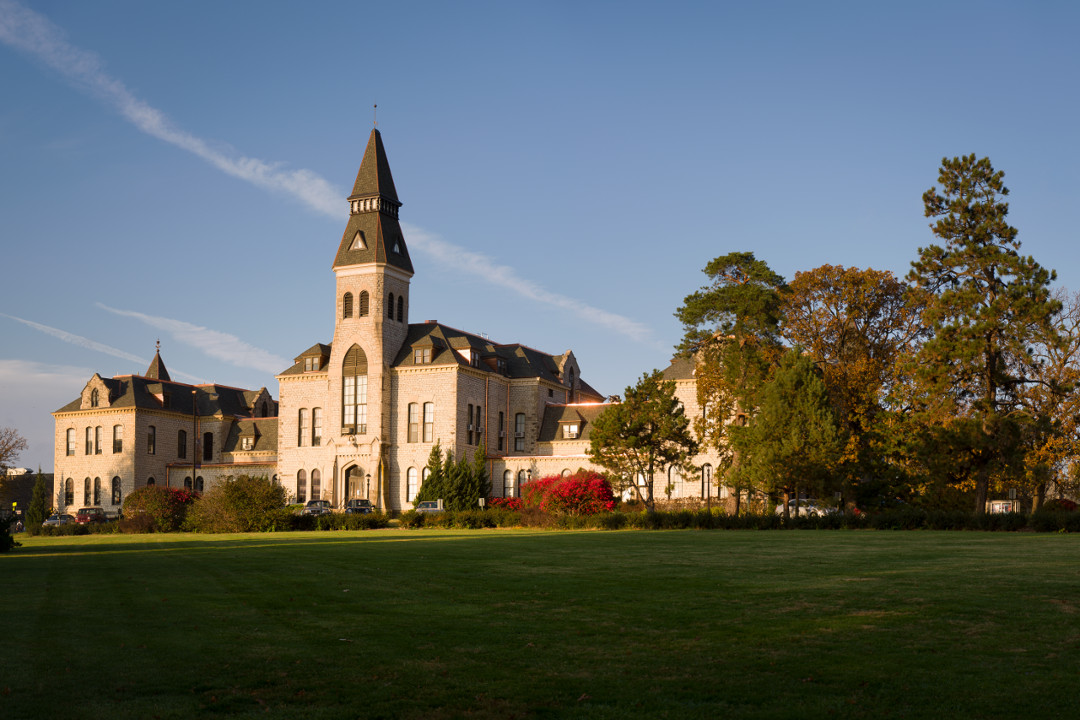
Kansas State University (K-State) is a comprehensive, research, land-grant institution serving students and the people of Kansas , along with the nation and the world. Since its founding in 1863, the University has evolved into a modern institution of higher education, committed to quality programs, and responsive to a rapidly changing world and the aspirations of an increasingly diverse society. K-State, along with other major comprehensive universities, shares responsibilities for developing human potential, expanding knowledge, enriching cultural expression, and extending its expertise to individuals, businesses, education, and government. These responsibilities are addressed through an array of undergraduate and graduate degree programs, research and creative activities, and outreach and public service programs. In addition, its land-grant mandate, based on federal and state legislation, establishes a focus to its instructional, research, and extension activities, which is unique among the Regents' institutions.
Review of the selected degree programs each year serves to help in the attainment of future goals, development of fresh curricula, and meeting the needs of students, faculty, and the Board of Regents (BOR). K-State's Program Review process incorporates the six criteria identified by the BOR in their program review document. Essentially, the K-State process is divided into two parts. The first part includes the departments preparing detailed reports with information on their instructional and scholarly programs and service activities. The Office of Planning and Analysis provides the Statistical Overview data reports to departments to aid in the review and assists with any additional requests from the departments for data. These departmental reports are reviewed by the respective College Dean, the College Committee on Planning, the Graduate School Dean (if a graduate program), and the Provost. The reviewers make recommendations, and departments prepare a final detailed program review report (PRR). The second part of the process involves the Deans, who prepare the two-page summaries. Drafts of the PRR and the two-page summaries are provided to the Provost for review and comment.
For the 2004 cycle, K-State reviewed the academic degree programs for the social sciences programs, interdisciplinary programs, and secondary degree programs within the College of Arts and Sciences. This included the following disciplines:
The summaries for each program are attached. Where possible the summary reports for all degree programs within the department were combined into a single page. The following provides a short review of significant highlights and recommendations for the departments and their related degree programs.
The 28 degree and three secondary major programs reviewed this year were from eight academic departments and the Dean's office and are, on the whole, strong and viable academic areas. These programs are essential to the general education and academic diversity of K-State. Some of the degree programs reviewed this year are unique to the state and are not offered by any other institution in the state (e.g., Military History ) or in the nation (e.g., online Masters in Industrial Organizational Psychology and a Ph.D. in Rural Geography ). Of the 28 degree programs offered, five are Ph.D.'s, eight are master's, 14 are bachelor's, and one is an associate's degree. Overall, each department and its academic programs provide options and opportunities for the advancement of education, research, and service for the state of Kansas , the nation, and the world.
Each program provides instructional services to undergraduate students outside its respective major. Faculty members both inside and outside the College of Arts and Sciences contribute to the interdisciplinary and secondary degree programs offered through the Dean's Office. Undergraduate students are provided opportunities to work within a specific research area to gain knowledge and experience. In several of the programs, students have multiple opportunities to study abroad or address international issues in their coursework. Graduates with the master's degree are accepted into doctoral and professional programs or become employed in higher education, public and private sectors, and in government agencies. Doctoral graduates are successful in obtaining employment in their respective fields, many at highly rated institutions of higher education.
The Economics bachelor's degree program prepares students to have an understanding of economic theory and its applications, the technical skills necessary for work as economists, and the communication skills required for successful employment or graduate education. Several students in this program have become Rhodes, Truman, or Fulbright Scholars. Bachelor's recipients have pursued careers in business, government and academia. Employment opportunities for students have increased in recent years, and according to the U.S. Department of Labor, Occupational Handbook (March 2004), employment of economics majors is expected to grow about as fast as the average for all occupations through 2012. The graduate program provides rigorous training in economic theory and econometrics, emphasizing research on applied and policy-oriented fields. The department's service contributions at the graduate level are critical to the success of other graduate programs at K-State. For example, students in the master's program in agricultural economics take three master's-level courses taught by the department; doctoral students in agricultural economics take six courses taught by the department; and graduate students in the master of business administration program take one course offered by the department.
The Geography department prepares students in four key areas of geographic inquiry: human-environment interaction, population and health, culture and landscape, and regional systems. The department is unique in that it houses the Geographic Information Systems Spatial Analysis Laboratory (a remote sensing research laboratory), a GIS/Remote Sensing computer teaching facility, and an environmental geography teaching laboratory. In the National 2000 Education Plan approved by the U.S. Congress, geography was identified as one of the five required disciplines. Students in the bachelor's program have enjoyed a good job market, as a demand exists in both the private and public sectors for people with geographic training, particularly those who have Geographic Information Systems (GIS) skills. The master's program prepares students for either an applied professional career or more advanced study. The doctoral program emphasizes research in rural areas and small town settings, making the program unique in the state of Kansas and one of only a few programs in North America with such an emphasis .
The History department engages its students in an exploration of the complexity, ambiguity, and the inevitable diversity of the human endeavor, seeks to inculcate in students the habits of analytic thinking and the discernment of meaning, and encourages the practice of oral and written communication skills, all of which serve as a foundation for a broad array of life and career choices . A pproximately 85% of the department's instructional mission is directed toward providing undergraduate courses that fulfill requirements for university general education and degree programs in other departments. Six of the departmental faculty members have expertise in military history, which represents the largest collection of such expertise in any department in the United States . Moreover, the inauguration of the Institute for Military History and 20 th Century Studies has allowed the department to forge a relationship with the Command and General Staff College at Fort Leavenworth . This, in turn, has brought new doctoral students to the program.
The A.Q. Miller School of Journalism and Mass Communication is one of the 110 journalism programs fully accredited by the Accrediting Council on Education in Journalism and Mass Communications. The school operates three stand-alone multi-media computer labs, a distributed audio-video-multimedia lab, a worldwide web design studio, a television studio, and a radio station with a satellite studio. In 2003-04, the Miller School formed MediaCats, a student-run electronic media production house that produces television programming for local and campus cable channels, and video programming for the K-State Athletic department or other clients. This facility gives students experience in face-to-face client demands, as well as budgeting of time and money. The bachelor's program is the largest major in the College of Arts and Sciences and the University and has concentrations in journalism, advertising, electronic media, and public relations. The master's program is unique within the state because the degree blends professional application, theory, and management concepts and practices.
The Political Science department's mission is to provide students with a foundation for the systematic study of government and politics in the fields of comparative politics, international relations, political thought, public administration, and U.S. government. The department promotes international studies by recruiting international students, developing exchange agreements with foreign universities, and organizing presentations by international scholars and diplomats. Majors are of a high caliber and regularly become winners of Rhodes, Truman, Marshall, Fulbright, Udall, or Rotary International Scholarships. The master's program is designed to meet the educational and professional needs of students planning to pursue careers in governmental relations, the international arena, or teaching at the community college level. The program has attracted six Muskie Fellows, who are elite students from former Soviet bloc countries, one Fulbright Fellow, and several Foreign Area Officers from the U.S. Army.
The National Association of Schools of Public Affairs and Administration (NASPAA) accredits the master of public administration program. This accreditation assures that the program and its faculty members meet all national standards for graduate programs in public administration. The mission of the program is to provide students with a foundation for the systematic study of public administration in the major fields of personnel, budgeting, organization theory, and public and not-for-profit management. Although the program is integrated into political science, it is interdisciplinary, drawing on the expertise of faculty members in urban planning and design, the College of Business Administration , the psychology department, and the College of Human Ecology . The focus on international/ comparative administration was recently added and provides a unique content rarely seen in the state or region. There is a 100% success rate of placing graduates in employment positions for which they are qualified.
The Psychology department's mission is to engage in the discovery of knowledge about behavior, the biological and psychological processes that affect that behavior, and to share that knowledge and the processes for obtaining it with the students and the scholarly community. The department occupies an interesting position within the university as it represents an intersection with the social sciences, the natural sciences, human ecology, animal science, and even engineering. Although the department does not house a clinical program, it does provide undergraduates with a p sychological technician option in clinical psychology, in which they gain both laboratory and off-campus internship experience in a mental health related setting. A unique feature of the department is that it offers the only online Masters in Industrial and Organizational Psychology (MIOP) program in the nation. In addition, feedback from several graduate alumni have indicated that the Graduate Teaching Apprentice Program, with its supervised teaching experience and its development of a Teaching Portfolio, was instrumental in the attainment of their current positions. The majority of master's degree students receive this degree as part of their Ph.D. program. The American Association of State Psychology Boards and the National Register of Health Service Providers in Psychology have recognized the advanced graduate programs as Designated Doctoral Programs in Psychology.
The Sociology, Anthropology and Social Work department is unique in that it houses three special information repositories: (1) U.S. Census data and publications, (2) ethnographic materials, and (3) 50-tons of archaeological research collections. The department emphasizes rural social settings and practical application across its course content. B achelor's degrees are offered in each of the three discipline areas, along with a master's and Ph.D. degree offered in the area of sociology. Graduates from all three undergraduate programs become employed throughout the state as account managers, litigators, servants of criminal justice and social welfare systems, and program managers. Faculty members also teach University General Education (UGE) courses and service-type courses required for other degree programs at the university.
The degree programs offered through the Dean's Office in the College of Arts and Sciences are unique among the college's majors. The bachelor's programs offered are Women's Studies , Humanities/ Humanistic Studies , Life Sciences , Physical Sciences , and Social Sciences , along with a multidisciplinary associate's degree program. These programs are comprised of sets of courses taught by faculty from a range of departments that, when taken together, make up the requirements for each degree program. Thus, these programs are not housed in a department, typically have no faculty exclusively affiliated with them, and are not tied to a single discipline.
The Women's Studies program was a secondary major from 1977 to 2004. Over the years, the secondary major grew steadily in faculty, students, and course offerings. The program became an important part of the university, contributing to a climate of diversity, interdisciplinary studies, and awareness and academic study of women's issues. Training and education in these perspectives are highly desired by employers. Early in 1991, the program was moved to the College of Arts and Sciences where it now resides. The women's studies undergraduate major was approved by the Kansas Board of Regents in Spring 2004 and implemented in Fall 2004. The degree program now provides a more developed curriculum that was not available under the secondary major.
The Humanities program is utilized by academically successful students (e.g., average ACT of 24) who select courses across the humanities in order to tailor their education around a central theme that is not offered within a single discipline (e.g., Greek culture as expressed through music, art, and literature). This program provides the opportunity for students to tailor a curriculum to fulfill his or her intellectual pursuits.
The Life Sciences program allows students the ability to get a general science education across multiple life-science departments. The program produces large numbers of majors (i.e., average of 85 students) and is especially important as a pre-cursor to a range of health-related graduate programs, such as medical school.
The Physical Sciences program deals primarily with nonliving matter, and focuses on the theoretical and observable natural phenomena of the world and universe. A capstone course is required for the degree in which students explore an area of physical sciences and prepare a final formal written report.
The Social Sciences program examines society's institutions including their structures, theoretical foundations, evolution, and interrelationships (e.g., how they affect and are affected by human behavior). Hence, it offers a multi-disciplinary curriculum that allows students the ability to study a broad array of social issues and concerns from multiple vantage points. This degree is one of the largest programs within the college, graduating on average 276 students a year.
The multidisciplinary associate's degree program allows students to obtain a two-year, liberal arts education that is not available anywhere else on the campus. The physical proximity of Fort Riley is one reason many military personnel are enrolled at K-State. Many of these enrolled military students are not affiliated with a particular discipline or major. Because these students have relocated multiple times throughout their military careers, most bring course credits from other institutions. The program allows students to apply previous credits along with their K-State credits toward the completion of a liberal arts degree.
The college also offers three secondary major programs ( International Studies , Latin American Studies , and American Ethnic Studies ) that are similar in scope to the other interdisciplinary programs. However, the faculty members come from a broader range of disciplines and the courses taught have a more multidisciplinary focus. A unique aspect to a secondary major is that students already have a primary major, and they enroll in the secondary major as a means of enhancing their knowledge and skills with a specific focus. The secondary majors increase student knowledge of international communities and provide the necessary skills or attributes to successfully live and work in a diverse world.
This review indicated that four masters and five inter/multidisciplinary programs (i.e., two bachelors, the associates, and two secondary majors) had low enrollments and/or low degrees conferred. Rationales for continuing each program are summarized below.
The average number of students enrolled (10) and average number of degrees conferred (4) for the Economics master's degree program does not meet the BOR's criteria of 20 students and five degrees conferred. However, the master's degree is utilized by students who do not wish to continue in the doctoral program (e.g., personal reasons or finding employment opportunities). Also the economics Ph.D. students must take the master's courses. Therefore, with a strong doctoral program, the cost to maintain the master's is negligible. The master's program is recommended for continuation.
The five-year average number of enrolled students (18) for the Geography master's program does not meet the BOR's minimum requirement. The average number of degrees conferred (5) continues to meet the BOR's criteria. Since 2001, the enrollment numbers have been steadily growing and 25 students are currently enrolled as of Fall 2004, which will meet the BOR's five-year average requirements. The master's program is recommended for continuation.
The average number of degrees conferred for the Political Science master's degree program is just short of the BOR's standard (4 instead of 5 graduates). The five-year enrollment average (22) continues to meet the BOR's enrollment criteria. This gradual increase in enrollment has had a positive effect on the number of degrees conferred in 2004 (i.e., 14 graduates). The next five-year average will be six degrees, which would meet the BOR's requirements. The master's program will be recommended for continuation.
The five-year average for student enrollment in the Sociology master's program has been below the BOR's criteria (i.e., average of 14 instead of 20 students). However, the average number of degrees conferred consistently meets the BOR's requirement. In 2002, the department implemented a Social Analysis option to the master's program as a means of increasing enrollment. The option prepares graduates for non-academic settings and involves more applied learning through 200 service hours usually completed within state social service agencies. The options seems to be attracting students to the program as is shown with the gradual enrollment increase from 14 students in Fall 2003 to 20 students in Fall 2004. Although the current increase does not yet meet the BOR's criteria, growth is occurring. The program is cost efficient because most of the master's courses offered are also required for the Ph.D. program. The master's program is recommended for continuation.
There are three interdisciplinary degree and two secondary major programs within the Dean's Office that do not meet the BOR's recommended criteria for student enrollment or degrees conferred. The humanities program average number of students enrolled (8) and the average number of degrees conferred (2) do not meet the BOR's criteria. Offering this program provides opportunity and balance with the other broad discipline-related programs offered by the college. The Humanities program provides unique opportunities for high performing students to tailor their education around a central theme that is otherwise unavailable in the college. The program continues to serve an important need for students and it incurs no additional cost to support the program. The Dean's Office is working to implement a new oversight for this program as a way of increasing awareness and student enrollment for this program. Over the next three years, the college advisors will devote more sustained attention to identifying students who will benefit from this major and will make curriculum adjustments that better fulfill the degree's intention of giving students a multidisciplinary humanities experience. The three-year goal will be to meet or exceed the BOR's criteria for student enrollment and degrees conferred. If the goal is not met after three years, then the program will be re-evaluated.
Like most multi-disciplinary programs, the Physical Science program provides an opportunity for students to focus on a broader range of courses (physical science) than a single major allows and thus, be more marketable for graduate or professional studies or within the private sector. Currently, the program is not meeting the BOR criteria for enrollment or number of graduates. However, the enrollment for Fall 2004 has increased from 18 to 21, which will increase the new five-year average from 13 to 15 students. On the other hand, the number of degrees conferred declined for FY 2004. Therefore, K-State plans to monitor this program for improvement over the next three years during which time initiatives will be developed to increase enrollment of students who prefer more breadth than depth.
The activity for the Associate's degree program is greatly impacted by the status of Fort Riley (e.g., large deployment of troops to Iraq reduces activity), thus enrollment and degrees conferred are currently very low. In 1989 to 1990 when Big Red One was stationed at Ft. Riley , enrollment in this program exceeded 30 students per year with well over 15 students graduating per year. Keeping the program active will provide flexibility to respond to the future needs of the anticipated increase of 3,500 solders to Ft. Riley . The associate's degree program is recommended for continuation.
The two secondary major programs are Latin American Studies and American Ethnic Studies . The average numbers of students enrolled are six and 10 respectively. These secondary programs build upon the primary major that students select by enhancing their knowledge and skills with a specific international or diversity focus. The secondary major programs add no additional operating costs, and they help to fulfill K-State's mission to be responsive to a rapidly changing world and to the expectations of an increasingly diverse society. These secondary programs are recommended for continuation.
Since the inception of the BOR program review process six years ago, K-State has internally reviewed 52 programs that have not met the BOR guidelines. Of these 52 programs, 22 have been discontinued, nine have been retained but monitored for improvements, four met the BOR guidelines within a three-year timeframe, and 17 are currently undergoing the internal review process and may be considered for discontinuance, merged with another program, or retained but monitored for improvement over the next three years.
Given the nature of these changes, the university will not see significant shifts in positions or other direct resources. However, various new strategies for improving enrollment and degrees conferred will be monitored.