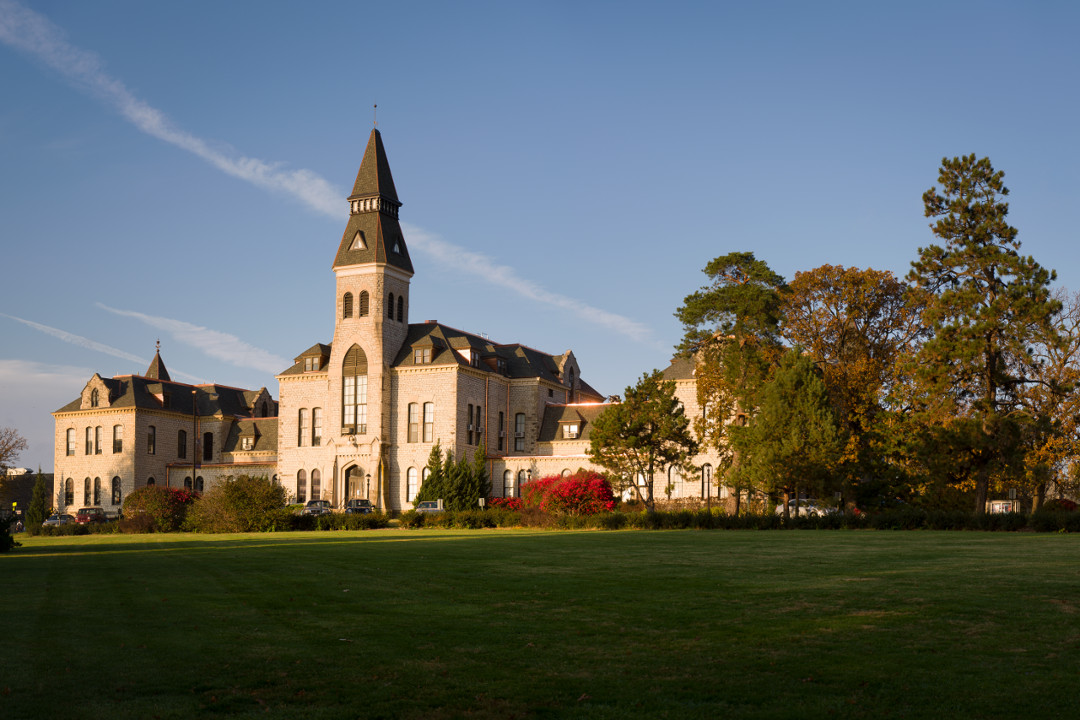
The graduate program in adult and continuing education at Kansas State University has a long history of providing the only post baccalaureate degree in adult education Regent's institutions. For more than twenty give years, K-State's program has been the place to which many citizens of Kansas have turned for advanced preparation related to providing quality education programs for adults. This program history combined with the core of adult and continuing education alumni and the relationships that have been built as a result of these associations, is one of the programs greatest strengths. The numerous graduates of the program and their competent, caring work reflect the preparation received in the master’s and doctoral programs in adult and continuing education.
Quality of Faculty
The Department of Foundations and Adult Education has a nationally known faculty, each of whom has contributed substantive leadership to her or his area of specialization. Faculty members have demonstrated the vitality, dedication and willingness to discuss, debate and examine the many issues crucial to learning in America today. By bringing different views skills, and experiences to the graduate experience, the programs in adult and continuing education have been enriched, revitalized and improved. Faculty and program graduates hold a number of key leadership positions in the field, resulting in a growing national visibility for the department.
Quality of Students
All master’s students meet the admission requirements which include: (a) an undergraduate degree from an accredited post secondary institution; (b) an undergraduate GPA of at least 3.0, particularly in the junior and senior years; and (c) a statement of professional goals and career objectives. In order to be admitted to the doctoral programs, students must have (a) a master's degree; (b) a graduate GPA of 3.0 or higher; and (c) GRE scores at or higher than the following minimum scores. Ed.D. and Ph.D. students must score at least 500 on the GRE verbal scale. Ph.D. students are required to achieve a minimum GRE score of 500 quantitative and 4.0 writing while Ed.D. students are admitted with either 500 quantitative or 4.0 writing scores. Applicant must also successfully complete an interview with a faculty member and submit five letters of recommendation, a written academic writing sample, and a critique of an empirical study.
Employer Demand
Graduates of adult and continuing education programs hold a variety of positions in public and private sector firms and organizations throughout the nation. In Kansas, graduates are employed as community college faculty members and administrators, faculty members and administrators in four year colleges, corporate training and organizational development specialists for organizations such as Sprint, Allied Signal Hills, Applebees, and Boeing, trainers and managers for major healthcare providers in Kansas City and Wichita, and directors of training, education and management programs for state agencies. Nationally they serve as faculty in four year colleges and universities, senior officers in the United States Army, Navy and Air force; and planners and trainers for the Department of Defense.
Service Provided to the Discipline, the University and Beyond
The faculty in the Department of Foundations and Adult Education are recognized nationally and internationally for their research and scholarship. Many have been actively involved in international educational initiatives in Europe, Russia and South America. Others have focused on the improvement of instruction in higher education settings in the United States. Program and student assessment, organizational development in educational settings, student development, science education and gender studies are among their areas of expertise. Faculty are regular presenters at national and international disciplinary specific meetings, serve as consultants to educational organizations, and publish on an ongoing basis.
The professional knowledge and skills of the faculty of the Department of Foundations and Adult Education are shared with members of the professional community and residents of Kansas, the Midwest and the nation at large in a variety of ways. Most notable of these is the strong commitment providing off-campus courses at several sites in the state. Faculty deliver instruction to locations easily accessible by students, and hold regular advising and research supervision outreach meetings throughout the state.
The graduate program in adult and continuing education is a unique resource, one that no other university in Kansas duplicates. Its history, strong faculty, core of dedicated students, and effective alumni speaks well of its ability to serve the people of Kansas and enrich their lives through learning. By responding to the projected increase in the number of adult learners occurring in colleges and universities, the private and public sector workplace, and in non-formal organizations, the graduate program in adult and continuing education at Kansas State will contribute to the continuing vitality of the University and advance the knowledge and practice of the lifelong education of adults in the years to come.
Cost Effectiveness
The graduate programs in this department are the only programs of this kind in Kansas. Clearly linked to the land grant mission of Kansas State University, these programs are the primary means in the state through which educators are prepared to work with adult learners. Graduate level student credit hour production has increased 12.24% during the last five years. During this same period there has been a department-wide decrease of 2.3 FTE faculty.