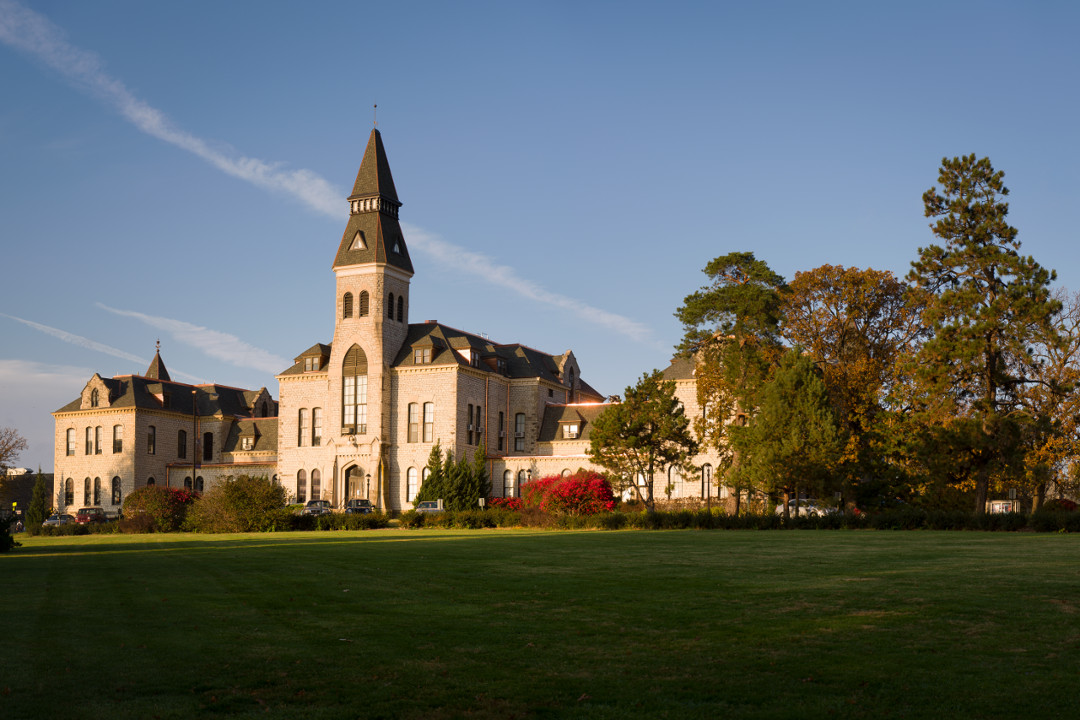
Kansas State University is a comprehensive, research, land grant institution first serving students and the people of Kansas, and also the nation and the world. Since its founding in 1863, the University has evolved into a modern institution of higher education, committed to quality programs, and responsive to a rapidly changing world and the aspirations of an increasingly diverse society. Together with other major comprehensive universities, Kansas State shares responsibilities for developing human potential, expanding knowledge, enriching cultural expression, and extending its expertise to individuals, businesses, education, and government. These responsibilities are addressed through an array of undergraduate and graduate degree programs, research and creative activities, and outreach and public service programs. In addition, its land grant mandate, based on federal and state legislation, establishes a focus to its instructional, research, and extension activities which is unique among the Regents' institutions.
Program review serves the purpose of attainment of future goals, development of fresh curricula, and meeting the needs of students, faculty, and the Board of Regents (BOR). In developing a review process, the Program Review Task Force at K-State seriously considered what faculty and department administrators should provide to make the review useful while avoiding unnecessary work. The materials used to prepare the review were consistent with the six criteria identified by the BOR in their program review document. Departments provided information on their instructional, scholarly, and service activities and programs. Deans have received a detailed Statistical Overview prepared by the Office of Planning and Analysis and specified by the Board of Regents. In response to the Program Review process, each department prepared a Program Review Report (PRR) containing common information.
In preparing the PRR, the Colleges and Departments were aware of degree standards for the number of majors, number of degrees granted annually, number of faculty supporting a degree, and quality of undergraduate students suggested by the Board of Regents. After a review of the Program Review Report and the information in the Statistical Overview by the College Dean, the Graduate School Dean and the College Committees on Planning, additional information could also be requested. The Deans are responsible for preparing the two page summaries. Drafts of the PRR and the two page summaries were provided to the Provost for review and comment.
As part of the annual Board of Regents Program Review process,
Kansas State University reviewed the academic degree programs
for the following Departments in the College of Agriculture
and College of Vert Medicine: Agricultural Economics; Agronomy;
Animal Sciences and Industry; Agricultural Communications;
Entomology; Grain Sciences and Industry; Horticulture, Forestry
and Recreation Resources; Plant Pathology; Anatomy and Physiology;
Clinical Sciences; Diagnostic Medicine/Pathology; Degree Programs
in the College of Veterinary Medicine. The two page summaries
for each degree program are attached to this report. The following
provides a short review for each department and their related
degree programs, a summary of the major issues, and summary
of major changes and plans.
Through its teaching, research, and outreach functions, the Department of Agricultural Economics plays a crucial educational function for the agricultural and food industries in Kansas. Nearly one-third of the gross state product is provided by agriculture and food related industries. The department provides a vital service function to other departments in the College of Agriculture. Several courses offered in the department are required for completion of degrees in other agricultural sciences, and many other courses are taken by students to expand their business and economic skills and knowledge. Both the M.S. and Ph.D. programs in Agricultural Economics have a complementary relationship with graduate programs in the Department of Economics. K-State's undergraduate program in agricultural economics and agribusiness has the third highest enrollment in the 17-state western U.S. region. The first Masters in Agribusiness distance education program in the U.S. began at K-State in 1997. Within the Big-12 peer group, seven institutions offer graduate programs (M.S. and Ph.D.) in agricultural economics; however, only three offer graduate programs in agribusiness.
Current undergraduate enrollment in the agricultural economics and agribusiness degree programs is 373 majors (169 in Agricultural Economics and 204 in Agribusiness). Undergraduate enrollment has continually increased over the past 10 years (185 majors in 1989). Course enrollment in the department has also increased significantly. Total student credit hours (SCHs) taught by the department has increased 80 percent since 1990-91, from 3,900 SCHs to over 7,600 SCHs. This increase is due to the larger number of departmental majors and of non-majors enrolled in undergraduate courses.
The faculty in agricultural economics are highly qualified. The department has 9.8 FTE devoted to instruction, but a total of 35 on-campus faculty, many of whom have joint appointments between instruction, research, and extension. The department offers Agribusiness degrees - B.S. and M.A.B.(CIP code 010101) and degrees in Agricultural Economics, B.S., M.S., Ph.D.(CIP code 010103). The Ph.D. is offered in conjunction with the Department of Economics.
Both
programs in the department of Agricultural Economics meet
all of the BOR guidelines for the number of faculty members,
number of undergraduate and graduate students enrolled and
graduated, and ACT averages for undergraduates. The two page
summary for the two degrees can be found in the Appendix.
The Department of Agronomy provides statewide leadership for teaching, research, and extension activities in plant breeding, crop production, range science, soil science, and weed science. The department also contributes substantially to activities in genetics, water sciences, and environmental sciences. Undergraduate teaching in agronomy prepares students to effectively serve agriculture, related industries, and society. Students are provided a sound professional and scientific foundation; a broad education for constructive living in the community, state and nation; and effective advising and extracurricular activities to develop leadership skills. Graduate education emphasizes knowledge and skills for research and applications within the many specialities that constitute agronomy, and produces skilled scientists, educators, and administrators for industry, government, university, and international service.
The total number of undergraduates has steadily increased from 96 in Fall 1994 to 158 enrolled during Fall 1999. Since Fall 1994, a total of 95 students, consisting of 54 M.S. and 41 Ph.D. students, have completed graduate programs in the department. Data provided by Career and Employment Services indicate an employment rate of 97 percent for the past five years for undergraduates in Agronomy. The data further indicate that 50 percent work in industry, 25 percent enroll in graduate school, and 13 percent return to the family farm. For graduates during the past 10 years, 27 percent are involved in teaching, research, or extension at universities; 10 percent are in graduate or postdoctoral study; 39 percent are administrators or research scientists in government agencies; 18 percent are research scientists or scientific representatives in industry; 2 percent are consultants; and 4 percent are in other categories such as business owner, homemaker, missionary, and farmer. The extremely high percentage of graduates in professional positions indicates a strong demand for graduates in the M.S. and Ph.D. programs.
The faculty in agronomy are highly qualified. The department has 7.9 FTE devoted to instruction, but a total of 48.5 on-campus FTE. Many of the faculty members have joint appointments between instruction, research, and extension. The department offers two degree programs, the B.S., M.S., and Ph.D. in agronomy (CIP code 020402).
This
program meets all of the BOR guidelines for the number of
faculty members, number of undergraduate and graduate students
enrolled and graduated, and ACT averages for undergraduates.
The two page summaries for the two degrees can be found in
the Appendix.
Demographics of Kansas confirm higher education degree programs in the Animal Sciences are essential for sustainability and profitability of the livestock and animal foods industries within the state, and where appropriate, the region, the nation and the world. The graduate program in Animal Sciences and Industry is the only one of its kind in the state of Kansas offering the only masters and Ph.D. Food Science programs. The Department of Animal Sciences and Industry operated in FY 2000 with forty-nine tenured or tenure-track faculty members. Departmental faculty provide leadership and advisor roles for the undergraduate Animal Sciences and Industry Degree, undergraduate Food Science and Industry Degree and advise over 90 percent of the undergraduates in the Pre-Veterinary Medicine curriculum option. Faculty also conduct major research programs developing M.S. and Ph.D. students in both Animal Sciences and Industry and Food Science and Industry. The degrees offered are consistent with the expectations of a land grant university.
The past decade represented a period of enrollment growth (43 percent for Animal Sciences). Student demand can be shown by high enrollments over a five-year period. Since 1996, undergraduate enrollment has averaged 561, masters level enrollment 46, and Ph.D. enrollment 27 per year. During this time, shortages of four year college graduates have been documented by the U.S.D.A. for graduates in the following curriculum areas: marketing, merchandising, and sales representatives; managers and financial specialists; and scientists and related specialists. Most of the animal science students graduate with a specialization in production management, business, science, or animal products and are qualified to fill those areas having employee shortfalls.. Based upon 1999 undergraduate enrollment, the Animal Sciences and Industry Department is the second largest (Texas A&M, #1) in the United States. Career opportunities in animal sciences range from self-employment to jobs with large corporations. In the business world, positions include management, sales, product development, personnel administration, regulation, field service, and government relations. Education positions include extension agents, teacher, research technician and laboratory director. In the agricultural communications field, there are editors, field representatives, broadcasters and public relations professionals. Among others, K-State animal sciences graduates are employed by artificial insemination services, feed companies, banks, equipment suppliers, cooperatives, breed associations, meat packers, food processors, dairy plants, feedlots, poultry integrators, and commercial farms and ranches. Masters and doctoral graduates are sought after by universities, industry and government.
While the Food Science program coordination is housed in the Department of Animal Sciences and Industry, Food Science is an interdepartmental undergraduate program that provides training in all aspects of the food industry. During the past decade food science undergraduate enrollment grew by 53 percent, masters numbers by 36 percent and doctoral numbers by 16 percent. Job opportunities in food science are strong and often there are not enough applicants to meet placement demand. Imaginative and well-trained people are needed in research and product development where they are involved in creating new food products and processes. Some food science graduates work with international food agencies in other countries to meet critical food needs.
The faculty in animal sciences and industry are highly qualified. The department has 18.36 FTE devoted to instruction, but a total of 49 on-campus faculty. Many of the faculty members have joint appointments between instruction, research, and extension. The department offers two degree programs, the B.S., M.S., and Ph.D. in animal science and industry (CIP code 020201) and the B.S., M.S. and Ph.D. in food science (CIP code 020301).
Both
degree programs in the department of Animal Science and Industry
(animal science and industry and food science) meet all of
the BOR guidelines for number of faculty members, number of
undergraduate and graduate students enrolled and graduated,
and ACT averages for undergraduates. The two page summaries
for the two degrees can be found in the Appendix.
The Agricultural Communications and Journalism program is complimentary to Kansas State University's institutional mission and supportive of its strategic planning themes. The program at K-State is the only one of its kind in Kansas. It focuses on educating students in the theory and skills necessary to effectively communicate accurate and unbiased technical and business-related information to producers, processors, and consumers of agricultural products. There are recognized agricultural journalism programs in four other Big Twelve institutions - Missouri, Oklahoma State, Texas A&M, and Texas Tech. Nationwide there are only 19 programs. The department works closely with the School of Journalism and Mass Communications at K-State. One of the faculty members is a member of the graduate faculty in the School and teaches Environmental Communications within the School.
Currently there are 45 majors but are working to increase this number. Their goal is 55-65. One year ago a second position was added to accommodate a larger enrollment and to increase the number of service courses available to other majors. Agricultural Communications and Journalism is often one of two majors that a student has, because students are encouraged to include other majors and minors to increase their marketability. In fall 2000, there were 24 junior and senior level students who declared Agricultural Communications and Journalism as their first major and 5 juniors and seniors who declared it as their second major. One of the main reasons to increase student numbers is because of the high demand from employers. Placement of students is near 100 percent. The Agricultural Communications and Journalism program integrates journalism skills with agricultural science and technology. Industry seeks out Ag Journalism students because of the combination of agricultural knowledge and mass communications skills. Graduates are employed in print media, public relations, advertising, marketing, electronic broadcasting, photography, and Internet communications related to the food and fiber industries.
The faculty and students in communication are highly qualified. The department has 2 FTE devoted to instruction. The department offers one degree program, the B.S., in communications - agriculture (CIP code 099999).
The
degree program in the department of Communications fails to
meet the BOR guidelines for number of faculty members and
number of undergraduate students enrolled. It is, however,
an interdisciplinary degree and is cost effective since it
shares many courses with other degree programs. The two page
summary for the degree can be found in the Appendix.
The Department of Entomology at Kansas State University is committed to providing entomological knowledge for a safe, sustainable, and competitive food, feed, and fiber system through integrated research and education. The department strives to maintain a stakeholder/clientele driven focus on solving problems in Kansas, although they may have a regional, national, or global impact. The Department of Entomology plays an important role in fulfilling the academic and other missions of Kansas State University, including undergraduate and graduate education, applied and basic research, and extension and public service. The Department of Entomology and its teaching program at Kansas State University play a crucial role in fulfilling the academic mission of the College of Agriculture and the University. Although there is no formal undergraduate major in entomology at K-State, the faculty teach a number of service courses that provide undergraduates in other disciplines with a better appreciation of arthropods and their impact on agribusiness and other components of society. The department maintains an internationally recognized graduate program leading to M.S. and Ph.D. degrees. The Department of Entomology at Kansas State University specifically addresses the land-grant mission.
During the period of 1995 through 1998, the department admitted 39 of 137 M.S. and Ph.D. applicants. The graduate enrollment has been remarkably consistent since 1995, but has shown a significant increase since Fall 1998. Enrollments that were around 26-27 graduate students have increased to 44 students in Spring 2000. Placement of Entomology graduates generally reflects national trends (Council of Entomology Department Administrators, Survey of Employment by 1995 and 1996 Entomology Graduates). Of entomology students graduating with an M.S. from 1995-1999, eight continued for a Ph.D., five obtained positions in government laboratories or agencies, and one went into private industry. Among those who earned Ph.D.s over that time, three went on to do postdoctoral research, five obtained University positions, and three went to work for government laboratories or agencies.
The faculty in entomology are highly qualified. The department has 2 FTE devoted to instruction, but a total of 49 on-campus interdisciplinary faculty. The department offers one degree program, the M.S. and Ph.D. in Entomology (CIP code 260702).
The
degree program in the Department of Entomology fails to meet
the BOR guidelines for number of faculty members and number
of graduate students enrolled and graduating in the master's
program and the number of Ph.D.s graduating. It is, however,
a campus-wide interdisciplinary degree and is cost effective
since it shares many courses and faculty with other degree
programs. The two page summary for the degree can be found
in the Appendix.
The mission of the Department of Grain Science and Industry is to be a center of excellence in all aspects of grain processing, handling, storage, quality and utilization through multifaceted teaching, research and transfer of technology to Kansas and the world. The department resides in Shellenberger Hall and provides the classrooms, training laboratories and semi-commercial scale processing equipment necessary for training and preparing students for leadership positions in the Flour Milling, Feed Processing, Baking and Allied Industries in the United States. The department offers the only academic programs of its kind in the nation and the world; baccalaureate degrees in Baking Science and Management (BSM), Feed Science and Management (FSM), and Milling Science and Management (MSM). The unique nature of these and the graduate programs identifies the department on a national and international level as a major source of graduates for research and management/ leadership positions in the food, feed and allied industries, universities and research institutions.
The K-State program in FSM began in 1951 at the request of feed industry executives. The students earn a degree built around the study of the animal feed business with emphasis on manufacturing management. The combination of General Education, required Grain Science courses and electives, and industry internship provide students the opportunity to become well rounded, technically proficient, problem solving employees for the feed industry. Even though enrollment in this degree program has consistently been between 41 and 50, this year the number enrolled has declined to 31. Faculty plan to develop an aggressive recruiting campaign in the high schools and junior colleges to attract students to this program.
By the request of U.S. Bakers organizations in 1963, the BSM degree program was created. The curriculum is designed to train graduates for administrative, research, production, and executive positions in the baking industry. Students enrolled in the BSM program, whether it is the operations or cereal chemistry option along with summer internship experiences, are in demand by industry because of their accumulated academic industry based experience. Student enrollment over the past 16 semesters ranged from a low of 25 in spring 1995 to a high of 42 in Fall 2000. Due to the promotional efforts by BSM faculty, student enrollment has increased by over 33 percent in the past four years.
From the beginning, the milling industry has been a supporter of the program and over the years has contributed substantial funds for scholarships and capital improvement projects. The curriculum is designed to train graduates for production and/or management/leadership positions in the grain processing industries. Demand for this degree program has been fairly consistent over the past ten years ranging for a low enrollment of 95 this year to a high of 120 in 1998. This is the first time in this period that enrollment dropped below an average 100. For the 1999-2000 academic year, 89 percent took jobs in the industry and 11 percent went on to continue their education. With undergraduates being employed nationwide, the demand for MSM graduates is greater than the department supplies.
For these three programs, it is generally recognized that student enrollment would be higher in these unique programs if students across the nation had the opportunity to attend without having to pay out-state tuition. In addition, the industrial internship program provides students and industry with opportunities for respective evaluations and possible compatibilities. As a consequence of this combination of academic and industrial experience, it is not unusual for students to have multiple job offers to choose from when they graduate.
Currently there are 46 graduate students in grain science, 20 in the Masters program and 26 in the Ph.D. program. There is 100 percent placement of all students who stay in this country after receiving their graduate degree. They hold research positions primarily in the U.S. food, feed and baking industries with such well-known companies as Cargill Inc; Kellogg's, Hershey Foods; Quaker Oats Co; Kraft Foods, Coors Brewing Co; and Interstate Bakeries Co. Others are employed at Land Grant Universities and Federal Research Laboratories.
Only
one of the degree programs in the department of Grain Science
and Industry (bakery and management) fails to meet all of
the BOR guidelines for number of faculty members, number of
undergraduate and graduate students enrolled and graduated,
and ACT averages for undergraduates. The third program, Bakery
Science and Management is a Service Support Program, and thus
has a small number of students enrolled and graduating. But,
this program is cost effective since it shares many courses
with other degree programs. The two page summaries for the
two degrees can be found in the Appendix.
The mission of the Department of Horticulture, Forestry and Recreation Resources is to provide learning experiences (class-lab/experiential) for students at the undergraduate and graduate level in the areas of Horticultural Sciences, Horticultural Therapy, and Park Resource Management and Conservation. The mission also includes conducting both basic and applied research in Horticultural Sciences and Natural Resources and science based extension education programs in both Horticulture and Forestry/Natural Resources. The departmental mission also includes forest land management across the state of Kansas through the operation of the Kansas Forest Service. The Horticulture Science and Natural Resource related instructional programs under the department are fully aligned with the land-grant institution mission serving the state's agriculture and natural resource interests. Horticulture industries in the State of Kansas and the nation are growing rapidly as the nation's population moves to urban centers. The department's academic programs are all unique within the College, University and Kansas Board of Regent System.
The demand for undergraduate training across all areas of horticulture excluding horticultural therapy runs currently in the area of 300 students. This enrollment should increase dramatically to 450 to 500 students with the new golf course management program and the job opportunities for graduates in general horticulture. The department will maintain the enrollment of an estimated 25 Masters level students. This could move to 30 to 35 students depending on the availability of grants and support dollars. The departments maintain somewhere between 10 - 15 Ph. D. level students. B.S. graduates in Horticulture are all in high demand by the various industries (landscape design/maintenance, nursery production, greenhouse production, turf grass (golf course management) and fruit and vegetable production). While many of the M.S. level horticulture students go into industry, a sizable portion do continue on to the Ph.D. The Ph.D. graduates go to academic positions at prestigious U.S. universities. With only 20 identified departments in the U.S. offering Ph.D. level training in horticulture, the students graduating from Kansas State University are recognized as some of the finest in the nation.
In 1971, the then Department of Horticulture at K-State in cooperation with the Menniger Foundation in Topeka established the first B.S. program in Horticultural Therapy in the U.S. Currently, there are four programs in the U.S. The curriculum draws heavily on the social and behavioral sciences to obtain the type of interdisciplinary education needed to be a therapist. K-State's program is considered the leading program in the world for setting standards for research on human bio-medical responses to horticultural plant environments. The students in this program are generally non-traditional in terms of age, background, and residence. Student demand continues to grow as evidenced by three new bachelor's degree programs in the U.S. However, enrollment at K-State has been controlled at the undergraduate level due to a shortage of faculty. Recruitment plans are to publicize through professional meetings, professional publications and high school and community colleges.
Over the past ten years, the Park Management and Conservation enrollment has been consistently high, between 125 and 150 students. Most employment opportunities are in the public sector. On the other hand, the Recreation and Park Administration enrollment has not been as positive because of competition from other Regents institutions offering a similar program. However, employment for these students has been relatively high.
The faculty in horticulture, forestry and recreation resources are highly qualified. The department has 8.7 FTE devoted to instruction, but a total of 23 on-campus faculty. Many of the faculty members have joint appointments between instruction, research, and extension. The department offers four degree programs, the B.S. in horticulture therapy (CIP code 512399), the B.S., M.S., and Ph.D. in horticulture science (CIP code 020403), the B.S. in parks recreation and leisure facilities management (CIP code 310301) and the B.S. in recreation and parks administration (CIP code 319999).
Two
of the degree programs in the department of Horticulture,
Forestry and Recreation Resources (horticulture therapy and
recreation and parks administration) fail to meet all of the
BOR guidelines for number of faculty members, number of undergraduate
and graduate students enrolled and graduated, and ACT averages
for undergraduates. The recreation and parks administration
degree program will be recommended for discontinuation and
added as a specialization in the parks recreation and leisure
facilities management degree. The horticulture therapy program
has been under review and has developed a plan for increasing
it enrollments. The two page summaries for the degree can
be found in the Appendix.
The Department of Plant Pathology has a comprehensive research, extension, and graduate teaching agenda and is recognized world-wide for its contributions to basic knowledge and practical applications in plant and microbial biology, disease prevention and management, and innovations in education. The excellent diagnostic lab serves extension agents, crop consultants and the public offering identification and control recommendations for plant diseases. "To understand and improve plant health". This concise mission statement embodies the commitment to research, education and extension. The tri-partite mission is rooted in the belief that sustainable increases in agricultural productivity depend upon healthy plants free of disease and the threat of disease outbreaks. Graduate teaching is an integral part of the research conducted in the department. Agriculture is key to the economic health of the State of Kansas. Losses to diseases in the most important crop, wheat, have exceeded 20 percent in past years with similar, or worse, losses experienced by all crops. There are no other facilities in the State of Kansas that offer degrees in Plant Pathology.
The numbers of inquiries and applications for graduate school in Plant Pathology has risen sharply the past few years, due in large part to the advent of electronic mail. Inquires in1999 numbered 210, roughly double the number five years ago. Of these 210 inquiries received in 1999, 53 submitted completed applications; 12 applicants were accepted (five of whom declined) and 41 were rejected. Many of the rejections were because the department lacked either space or resources (usually financial) to accommodate them. Currently, the faculty of 22 serve as major professors for 27 graduate students in Plant Pathology and 9 in the interdisciplinary Genetics program. There are 10 students in Plant Pathology and 2 in Genetics at the masters level. Seventeen students are pursuing doctoral degrees in Plant Pathology and 7 in Genetics. The department is committed to increasing its graduate student members in Plant Pathology as indicated by the following enrollment figures by year: 18 in 1998, 22 in 1999, and 27 in 2000. Virtually 100 percent of the graduates are placed in employment directly related to their field of study.
The faculty in plant pathology are highly qualified. The department has 1.3 FTE devoted to instruction, but a total of 22 on-campus interdisciplinary faculty. The department offers one degree program, the M.S. and Ph.D. in plant pathology (CIP code 26.0702).
The
degree program in the department of Plant Pathology fails
to meet the BOR guidelines for the number of faculty and the
number of graduate students enrolled and graduating in the
master's program and the number of Ph.D. graduating. It is,
however, a campus-wide interdisciplinary degree and is cost
effective since it shares many courses and faculty with other
degree programs. The two page summary for the degree can be
found in the Appendix.
Kansas State University is the only institution in Kansas granting a bachelor's of science degree in Animal Sciences and Industry and a Doctorate of Veterinary Medicine. The Pre-Veterinary Medicine curriculum is offered through the College of Agriculture and the College of Arts and Sciences to allow students to fulfill the pre-professional program as prescribed by the College of Veterinary Medicine.
While enrollment in the pre-veterinary medicine major has declined over the last four years, more of the students with the career goal of becoming a veterinarian are completing their requirements as an animal science major in the pre-veterinary/science option. Enrollment for the fall semester 2000 was 75 for pre-veterinary medicine. While most students in the major start the program with the intent of going to veterinary school, many go on to graduate school or change majors and go into other careers. Veterinarians may work in private practice, government service, armed forces, research, industry, and private employment. The pre-veterinary medicine degree is granted to students after completing the second year of Vet School.
The faculty in the pre-veterinary medicine program come from across the college. One degree program, the B.S. in pre-veterinary studies (CIP code 51.1104), is offered out of the dean's office.
The degree program meets all the BOR guidelines.
The interdisciplinary Genetics program was developed to provide a specialized education in genetics to students from a range of scientific disciplines. There a 31 graduate faculty members distributed among seven participating academic departments including Agronomy, Animal Science & Industry, Biochemistry, Biology, Entomology, Plant Pathology, and Veterinary Medicine. The Genetics program offers both Ph.D. and M.S. degrees. The interdepartmental composition of genetics faculty exemplifies the strong cooperation among geneticists and administration. As an interdepartmental program, external funding is channeled through participating academic departments instead of through the Genetics program. Four M.S. and 14 Ph.D. students are currently enrolled in the Genetics program. Students are required to be involved in a graduate research program that addresses an original research problem. The majority of graduates from the Genetics program secure professional positions in academic institutions and private companies.
Because the Genetics program is an interdisciplinary program and thus has small number of students, the program is cost effective since it shares many courses with other degree programs.
The interdisciplinary Natural Resources and Environmental Sciences (NRES) secondary major is an array of courses dealing with natural resources and environmental concepts taken by students interested in adding this academic emphasis to their primary major. Participation and completion of the NRES secondary major is noted on the K-State transcript. Students who augment their education and experiences with a NRES secondary major find attractive career opportunities in government, industry, and education.
The
two page summaries for these programs can be found in the
Appendix.
The Department of Anatomy and Physiology is a multi-disciplinary department with multi-faceted responsibilities. It is classified as a Research Support Program. The mission of the department encompasses instruction, research and continuing education in the disciplines of Gross and Micro anatomy, Cell and Systemic Physiology, Pharmacology and Neuroscience, all of which are central to the education of veterinarians, to the education and training of graduate students for biomedical careers in teaching, research, and industry, and to the fulfillment of the University's mission to conduct basic and applied research important for the diagnosis and control of animal and human disease. All faculty are involved in teaching in the D.V.M. professional curriculum. In addition to the D.V.M. program and training for the department's graduate students, a bioinstrumentation course is taught in conjunction with the College of Engineering and is for graduate students in engineering, biology, biochemistry, physics, kinesiology as well as veterinary medicine. The department has played a major leadership role for the College of Veterinary Medicine in setting high standards for extramurally funded research.
The department typically has 1-2 M.S. students and 10-12 PhD students in its programs at any one time. The graduates are in high demand for industry and academic positions. Over the last 10 years the department has graduated 36 Ph.D. students. Twenty-one of them accepted university positions and 15 accepted industry positions. Multiple employment opportunities were available for all of the students.
The faculty in anatomy and physiology are highly qualified. The department has 13 faculty. The department offers one degree program, the M.S. and Ph.D., in anatomy and physiology (CIP code 260706).
The
degree program in the department of Anatomy and Physiology
fails to meet the BOR guidelines for number of master's students
enrolled. However, its training model does not require students
to complete a master's degree unless they want to or if they
are stopping at this degree level. The two page summary for
the degree can be found in the Appendix.
The Department of Clinical Sciences has the unique responsibility for veterinary clinical instruction and directed clinical service. The Veterinary Medical Teaching Hospital is the only veterinary teaching hospital in Kansas and is one of only 27 in the United States. Faculty provide classroom, laboratory, field service and clinical education for approximately 50% of the entire D.V.M. curriculum. Directed service incorporates the diagnosis, management and prevention of diseases in individual animals and in herds/flocks of domestic and exotic animals and wildlife. The mission of the Department of Clinical Sciences is to provide high quality veterinary education to D.V.M. students, interns, and clinical residents. In so doing, it is necessary to provide accurate and up-to-date diagnostic and therapeutic services, and to advance the science of veterinary medicine through research. Most of the research is of the applied nature. It is the only department in Kansas that offers the M.S. in Veterinary Clinical Sciences and is classified as a Research Support Program in relationship to graduate education.
K-State graduate veterinarians are best known for their broad-based education with particular strengths in clinical problem-solving, beef cattle production, zoological and wildlife medicine, and oncology. The curriculum allows for the students in their final three semesters of the D.V.M. program to be completely immersed in clinical education in the Veterinary Medical Teaching Hospital. The students are of excellent quality, being carefully selected from highly qualified and competitive undergraduate student populations from all over the country and from around the world. Much of the post-D.V.M. curriculum is related to applied, advanced clinical training through internships and residency programs. These post-D.V.M. trainees are known as "house officers" and are selected from a pool of applicants numbering over 20 per open position. Students selected for these training programs are in at least the top 10% of graduate veterinarians. House officers who desire to pursue an academic career are encouraged to enroll in the department's M.S. program or in a Ph.D. program in the departments of Anatomy and Physiology or Diagnostic Medicine/Pathobiology.
Most clinical interns and residents select employment in private referral veterinary practices. Those with a combined residency/graduate degree seek employment in academia or industry. A veterinarian completing a residency program has at least 10 opportunities in private specialty practice. A resident with a graduate degree has from 5-10 opportunities in academia or industry.
The faculty in clinical sciences are highly qualified. The department has 27 faculty. The department offers one degree program, the M.S., in clinical sciences (CIP code 512501).
The
degree program in the department of Clinical Sciences fails
to meet the BOR guidelines for number of master's students
enrolled. However, it is a Research Support Program. The two
page summary for the degree can be found in the Appendix.
The Department of Diagnostic Medicine/Pathobiology is one of three academic departments in the College of Veterinary Medicine providing education for the professional D.V.M. program. The mission of the department is to provide instruction, research, service and continuing education in the epidemiology, diagnosis, pathogenesis, prevention and control of infectious, parasitic, metabolic, and inherited diseases of animals and humans. The Pathobiology graduate program is the only one in the state of Kansas. A dual degree (D.V.M./M.S.) program is offered for professional students interested in a combined D.V.M. and graduate education. The department houses the state Veterinary Diagnostic Laboratory. The Laboratory is internationally recognized for its diagnostic capabilities in rabies for both animals and humans, infectious diseases in swine and greyhounds, and respiratory diseases of cattle.
The department consists of 24 faculty members (20 tenured and 4 tenure-track). Over half of the faculty members have Kansas Agricultural Experiment Station appointments with research commitments ranging from 30-100% to study diseases related to food animals. Due to the high standards set by the faculty in the Veterinary Diagnostic Laboratory, the laboratory is fully accredited by the American Association of Veterinary Laboratory Diagnosticians.
The departmental graduate program provides M.S. and Ph.D. degrees in diagnostic medicine/pathology (CIP code 26.0704) that includes educational opportunities in all departmental disciplines. The program is multi-disciplinary and includes faculty from the Departments of Diagnostic Medicine/Pathobiology, Anatomy and Physiology, Clinical Sciences, Biochemistry, Biology, and the Food Animal Health and Management Center. Residency training programs are offered in the clinical and anatomic pathology as well as toxicology. The goal of these programs is to prepare post-D.V.M. trainees for board certification in their respective specialty and enhance employment opportunities in industry and academia. The graduate students and residents finishing the training programs are in high demand with multiple employment opportunities.
The
degree program in the department of Diagnostic Medicine/Pathology
fails to meet the BOR guidelines for the number of master's
students enrolled. However, its training model does not require
students to complete a master's degree unless they want to
or if they are stopping at this degree. The two page summary
for the degree can be found in the Appendix.
The Doctorate Program in Veterinary Medicine (D.V.M.) program is an Interdisciplinary and Coordinated Program offered from the Dean's Office of the College. It utilizes all of the departments in the College for teaching portions of the program. Since the program was established in 1905, a total of 5,355 students have earned their D.V.M. degrees at Kansas State University. Currently most of the graduates from this program accept positions in private veterinary practices throughout the region and the United States. Veterinarians are the only professionals licensed to diagnose and treat diseases of animals in the United States. In addition many veterinarians are involved in promoting food safety through positions in federal agencies such as the Food Safety and Inspection Service (FSIS) and our armed services; research and development of new drugs, treatments and prevention programs for both animal and human ailments; and maintenance of the health of animals involved in entertainment such as zoos, circuses, and sporting events. Veterinarians are comparative animal scientists prepared to directly address all aspects of animal health and, indirectly, many aspects of human health and well-being. Veterinarians are responsible for the efficient production of safe foods, particularly those from animal sources.
Because of limited laboratory teaching space and a limited number of faculty, enrollment in the D.V.M. degree program is restricted to 100 new entering students each fall. Therefore, the total enrollment in the D.V.M. degree program is 400 students. Applicants to the D.V.M. degree program are ranked as follows: 30% on science GPA for the 41 hours of prerequisite science courses, 40% on the composite GRE general examination scores, and 30% on the interview with the CVM Admissions Committee. New D.V.M. degree students are selected from approximately 120 applicants from Kansas, about 50 applicants from Nebraska, and approximately 400 applicants from other states and nations each year. Usually about 50 Kansas residents, 25 Nebraska residents (by contract with Nebraska), and 25 non-resident, non-contract students are admitted each fall. Up to two international students are admitted with each new class. The average beginning D.V.M. student is 24 years old, has 4.5 years of previous college, has a science GPA of 3.4, and an average composite GRE score of 1817 (maximum score equals 2400). Approximately two thirds of current classes are female. During the past ten years nearly all (average 95 to 100 percent) of the graduates of the D.V.M. degree program have passed their national exams. During the past ten year period there have been 4 to 5 "come to work" offers annually for each graduate from the D.V.M. degree program. There are currently many more positions available for new veterinarians than there are new graduates. Kansas State graduates are sought after because of the reputation of producing broad-based, "ready-to-practice", graduates. Unlike other colleges of veterinary medicine throughout the United States, many of the graduates seek positions with a food animal component. Kansas State University is currently producing a high percentage of the new veterinarians going into food and/or mixed animal practices throughout the United States. Kansas State University graduates are also sought after because of the strong elective programs in veterinary practice management and exotic animal medicine.
The faculty in the veterinary medicine program come from across the college. One degree program, the D.V.M. in veterinary medicine (CIP code 512401), is offered out of the dean's office.
The degree program meets all of the BOR guidelines. The two page summary for the degree can be found in the Appendix.
The 11 departments and 23 degrees programs reviewed this year are core to the mission of Kansas State University as a land grant institution. The Colleges of Agriculture and Veterinary Medicine are key to a state with a heavy social and economic investment in the land. The programs reviewed this year are on the whole strong and viable academic areas. Their instructional programs represent key components of K-State's success. The research and extension efforts are intertwined with this teaching mission. The majority of faculty in the College of Agriculture have joint teaching, research and extension appointments with funding for the research and extension coming from the Extension Systems and Agriculture Research Program funding. Faculty in the College of Veterinary Medicine carry both a heavy instructional load and directed service related to clinical services. Both colleges have degrees at the bachelor, master's, and doctoral levels. As noted in the 2 page reviews, graduates from these programs are highly successful in seeking further education or in their employment. Many of the degree programs reviewed this year are unique to the state and many are not offered by other institutions in the region.
While the majority of programs reviewed met the guidelines established by the BOR, the investment in interdisciplinary work in both agriculture and veterinary medicine creates a limited number of programs that appear to have limited faculty. However, faculty and course work for these programs come from many different academic areas. In a similar fashion, the commitment to research, extension, or directed service (i.e., in veterinary medicine) efforts creates the need for speciality degrees to supplement the research and extension programs. A number of degree programs are offered under these special conditions. In the case of veterinary medicine, the training model for their doctorate degrees does not require students to obtain a master's degree before completing a Ph.D., but the master's degree is necessary for those students unable or unwilling to continue working on a Ph.D.
During this review one degree will be discontinued (recreation and parks administration) and one degree program (horticulture therapy) with low enrollments will be closely monitored over the next several years as it implements plans to increase enrollment levels.
Over
the three years we have been conducting Program Review under
the new system, K-State has discontinued four degree programs
through the formal review process: Associate of Accounting;
Industrial Engineering Technology; Geophysics; and, this year,
Recreation and Parks Administration). K-State has had 28 programs
triggered for additional review internally. Although not all
the programs underwent the formal additional review process,
each department housing one or more of these programs was
requested to provide a written justification for not meeting
one or more of the minimum criteria.
Dropping the degree in recreation and parks administration is anticipated to have little or no fiscal consequences within the department. Increasing enrollments in the B.S. degrees for horticulture therapy should make this program more cost effective. Given the limited changes recommended above, the colleges will not see any significant resources made available from these recommendation.